

Asian Currencies - Convert Asian Currency Pairs
Asian currencies represent some of the world's largest and fastest-growing economies, from the economic powerhouses of China, Japan, and India to the dynamic emerging markets of Southeast Asia. Understanding Asian currency pairs is essential for international trade, travel, investment, and remittances, as Asia accounts for a significant portion of global economic activity.
The major Asian currencies include the Indian Rupee (INR), Chinese Yuan (CNY), Japanese Yen (JPY), South Korean Won (KRW), Thai Baht (THB), Singapore Dollar (SGD), Hong Kong Dollar (HKD), Indonesian Rupiah (IDR), Vietnamese Dong (VND), Philippine Peso (PHP), and Pakistani Rupee (PKR). These currencies reflect the diversity and dynamism of Asian economies, from developed financial centers to rapidly growing emerging markets.
What Are Asian Currencies?
Asian currencies represent the monetary systems of countries across the Asian continent, which includes:
- East Asia: China (CNY), Japan (JPY), South Korea (KRW), Hong Kong (HKD)
- South Asia: India (INR), Pakistan (PKR)
- Southeast Asia: Thailand (THB), Singapore (SGD), Indonesia (IDR), Vietnam (VND), Philippines (PHP)
These currencies share several characteristics:
- Economic Diversity: From developed economies (Japan, Singapore) to emerging markets (India, Indonesia)
- High Growth Potential: Many Asian economies are among the world's fastest-growing
- Trade-Oriented: Asian currencies are heavily influenced by export and import flows
- Remittance Flows: Significant remittance volumes, especially for INR, PHP, and PKR
- Tourism Impact: Tourism significantly affects currencies like THB, VND, and IDR
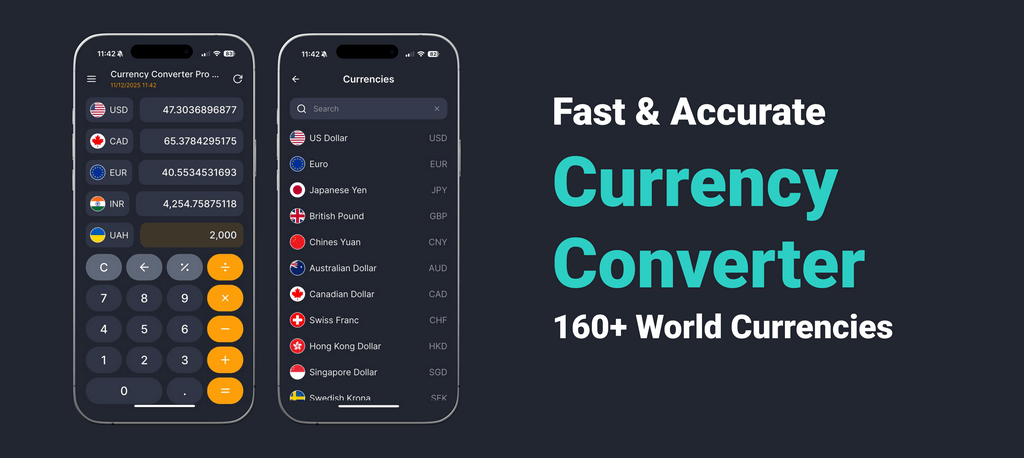
> 💡 For Real-Time Asian Currency Exchange Rates: Exchange rates change throughout each trading day. For the most up-to-date Asian currency rates updated in real-time, download our Currency Converter Pro Live app: > - Download on the App Store - Get live rates on iPhone and iPad > - Get it on Google Play - Get live rates on Android devices > > The app provides real-time exchange rates for 160+ world currencies, updated throughout each trading day based on live market data.
The Growing Importance of Asian Currencies
Asian currencies represent some of the world's fastest-growing economies, from China's massive manufacturing sector to India's tech industry and Southeast Asia's emerging markets. As Asia's economic influence grows, understanding Asian currency pairs becomes increasingly important for global trade, investment, and remittances.
Asia accounts for over 40% of global GDP and is home to more than half the world's population. This economic weight means Asian currencies significantly impact:
- Global supply chains and manufacturing
- Commodity markets (Asia is a major consumer)
- Technology and innovation sectors
- Remittance flows (millions of workers send money home)
Whether you're doing business in Asia, sending remittances, or investing in Asian markets, understanding these currencies is essential.
Diversity of Asian Currency Markets
Asian currencies span a wide spectrum:
- Developed Markets: JPY (Japan) and SGD (Singapore) are stable, liquid currencies with low volatility
- Emerging Giants: CNY (China) and INR (India) represent massive economies with growing global influence
- Southeast Asian Markets: THB, IDR, VND, PHP reflect dynamic emerging economies with high growth potential
- Commodity-Linked: Some Asian currencies are influenced by oil, metals, and agricultural exports
This diversity means:
- Different volatility profiles require different conversion strategies
- Remittance volumes significantly impact currencies like INR, PHP, and PKR
- Tourism affects currencies like THB and VND
- Trade relationships with China and the US drive many Asian currency movements
Practical Considerations for Asian Currency Conversions
Converting Asian currencies requires understanding:
- Remittance Patterns: High remittance volumes (especially for INR, PHP, PKR) create seasonal patterns and affect exchange rates
- Trade Dependencies: Many Asian currencies are sensitive to trade relationships, especially with China and the US
- Central Bank Policies: Asian central banks often intervene in currency markets, affecting exchange rates
- Volatility: Emerging market Asian currencies can be more volatile than major currencies
- Local Market Hours: Asian trading sessions (Tokyo, Singapore, Hong Kong) see higher liquidity for regional currencies
The currency pair guides in this section provide detailed information on each Asian currency, helping you navigate conversions effectively.
Asian Currencies Overview
Indian Rupee (INR)
The Indian Rupee is the official currency of India, one of the world's fastest-growing major economies. It is one of the most searched currency pairs globally.
- Symbol: ₹
- ISO Code: INR
- Central Bank: Reserve Bank of India
- Key Features: Large economy, growing middle class, high remittance volume
Chinese Yuan (CNY)
The Chinese Yuan, also known as the Renminbi, is the official currency of China, the world's second-largest economy. Its importance in global trade has grown significantly.
- Symbol: ¥ or 元
- ISO Code: CNY
- Central Bank: People's Bank of China
- Key Features: Growing global influence, major trading partner, managed exchange rate
Japanese Yen (JPY)
The Japanese Yen is the official currency of Japan, the world's third-largest economy. It is the most traded Asian currency and is known for its stability.
- Symbol: ¥
- ISO Code: JPY
- Central Bank: Bank of Japan
- Key Features: Low interest rates, safe-haven currency, major export economy
South Korean Won (KRW)
The South Korean Won is the official currency of South Korea, a major developed economy and technology hub.
- Symbol: ₩
- ISO Code: KRW
- Central Bank: Bank of Korea
- Key Features: Technology exports, stable economy, major trading partner
Thai Baht (THB)
The Thai Baht is the official currency of Thailand, a major tourism destination and emerging market economy.
- Symbol: ฿
- ISO Code: THB
- Central Bank: Bank of Thailand
- Key Features: Tourism-driven, stable economy, growing manufacturing sector
Singapore Dollar (SGD)
The Singapore Dollar is the official currency of Singapore, a major financial hub and developed economy.
- Symbol: $
- ISO Code: SGD
- Central Bank: Monetary Authority of Singapore
- Key Features: Financial hub, stable currency, high per capita income
Hong Kong Dollar (HKD)
The Hong Kong Dollar is the official currency of Hong Kong, a major international financial center.
- Symbol: $
- ISO Code: HKD
- Central Bank: Hong Kong Monetary Authority
- Key Features: Pegged to USD, financial hub, major trading center
Indonesian Rupiah (IDR)
The Indonesian Rupiah is the official currency of Indonesia, the world's fourth most populous country and a major emerging market.
- Symbol: Rp
- ISO Code: IDR
- Central Bank: Bank Indonesia
- Key Features: Large population, commodity exports, growing economy
Vietnamese Dong (VND)
The Vietnamese Dong is the official currency of Vietnam, a rapidly growing emerging market economy.
- Symbol: ₫
- ISO Code: VND
- Central Bank: State Bank of Vietnam
- Key Features: Manufacturing hub, rapid growth, export-oriented
Philippine Peso (PHP)
The Philippine Peso is the official currency of the Philippines, a major emerging market economy in Southeast Asia.
- Symbol: ₱
- ISO Code: PHP
- Central Bank: Bangko Sentral ng Pilipinas
- Key Features: High remittance dependency, growing economy, large population
Pakistani Rupee (PKR)
The Pakistani Rupee is the official currency of Pakistan, a major South Asian economy.
- Symbol: ₨
- ISO Code: PKR
- Central Bank: State Bank of Pakistan
- Key Features: High remittance volume, growing economy, large population
USD to Asian Currencies
USD to INR (US Dollar to Indian Rupee)
- URL: /usd-to-inr
- Average Rate (2025): 1 USD = 83 INR
- Volume: One of the most searched currency pairs
- Characteristics: Large economy, growing middle class
- Use Cases: Indian remittances, trade, investment
USD to CNY (US Dollar to Chinese Yuan)
- URL: /usd-to-cny
- Average Rate (2025): 1 USD = 7.25 CNY
- Volume: Growing importance in global trade
- Characteristics: Managed exchange rate, growing influence
- Use Cases: Chinese trade, investment
USD to JPY (US Dollar to Japanese Yen)
- URL: /usd-to-jpy
- Average Rate (2025): 1 USD = 150 JPY
- Volume: Most traded Asian currency pair
- Characteristics: Low volatility, safe-haven currency
- Use Cases: Japanese travel, trade, investment
USD to KRW (US Dollar to South Korean Won)
- URL: /usd-to-krw
- Average Rate (2025): 1 USD = 1,350 KRW
- Volume: Major Asian currency pair
- Characteristics: Technology exports, stable economy
- Use Cases: Korean trade, investment
USD to THB (US Dollar to Thai Baht)
- URL: /usd-to-thb
- Average Rate (2025): 1 USD = 36 THB
- Volume: Tourism-driven conversions
- Characteristics: Tourism-driven, stable economy
- Use Cases: Thai travel, trade
USD to SGD (US Dollar to Singapore Dollar)
- URL: /usd-to-sgd
- Average Rate (2025): 1 USD = 1.35 SGD
- Volume: Financial hub currency
- Characteristics: Financial hub, stable currency
- Use Cases: Singapore trade, investment
USD to HKD (US Dollar to Hong Kong Dollar)
- URL: /usd-to-hkd
- Average Rate (2025): 1 USD = 7.82 HKD
- Volume: Pegged currency pair
- Characteristics: Pegged to USD, financial hub
- Use Cases: Hong Kong trade, investment
USD to IDR (US Dollar to Indonesian Rupiah)
- URL: /usd-to-idr
- Average Rate (2025): 1 USD = 15,800 IDR
- Volume: Major Southeast Asian pair
- Characteristics: Large population, commodity exports
- Use Cases: Indonesian trade, investment
USD to VND (US Dollar to Vietnamese Dong)
- URL: /vnd-to-usd - Convert Vietnamese Dong to US Dollar
- Average Rate (2025): 1 USD = 24,400 VND
- Volume: Growing Southeast Asian economy
- Characteristics: Manufacturing hub, rapid growth
- Use Cases: Vietnamese exports, remittances
USD to PHP (US Dollar to Philippine Peso)
- URL: /usd-to-php
- Average Rate (2025): 1 USD = 56 PHP
- Volume: High remittance volume
- Characteristics: Remittance-driven, growing economy
- Use Cases: Philippine remittances, trade
USD to PKR (US Dollar to Pakistani Rupee)
- URL: /usd-to-pkr
- Average Rate (2025): 1 USD = 278 PKR
- Volume: High remittance volume
- Characteristics: High remittance volume, growing economy
- Use Cases: Pakistani remittances, trade
Asian Currencies to USD
INR to USD (Indian Rupee to US Dollar)
- URL: /inr-to-usd
- Average Rate (2025): 1 INR = 0.012 USD
- Volume: One of the most searched pairs
- Characteristics: Large economy, growing middle class
- Use Cases: Indian exports, investment
CNY to USD (Chinese Yuan to US Dollar)
- URL: /cny-to-usd
- Average Rate (2025): 1 CNY = 0.14 USD
- Volume: Growing importance
- Characteristics: Managed exchange rate, growing influence
- Use Cases: Chinese exports, trade
JPY to USD (Japanese Yen to US Dollar)
- URL: /jpy-to-usd
- Average Rate (2025): 1 JPY = 0.0067 USD
- Volume: Most traded Asian pair
- Characteristics: Low volatility, safe-haven currency
- Use Cases: Japanese exports, investment
KRW to USD (South Korean Won to US Dollar)
- URL: /krw-to-usd
- Average Rate (2025): 1 KRW = 0.00074 USD
- Volume: Major Asian pair
- Characteristics: Technology exports, stable economy
- Use Cases: Korean exports, investment
THB to USD (Thai Baht to US Dollar)
- URL: /thb-to-usd
- Average Rate (2025): 1 THB = 0.028 USD
- Volume: Tourism-driven
- Characteristics: Tourism-driven, stable economy
- Use Cases: Thai exports, travel
SGD to USD (Singapore Dollar to US Dollar)
- URL: /sgd-to-usd
- Average Rate (2025): 1 SGD = 0.74 USD
- Volume: Financial hub currency
- Characteristics: Financial hub, stable currency
- Use Cases: Singapore exports, investment
HKD to USD (Hong Kong Dollar to US Dollar)
- URL: /hkd-to-usd
- Average Rate (2025): 1 HKD = 0.13 USD
- Volume: Pegged currency pair
- Characteristics: Pegged to USD, financial hub
- Use Cases: Hong Kong exports, trade
IDR to USD (Indonesian Rupiah to US Dollar)
- URL: /idr-to-usd
- Average Rate (2025): 1,000 IDR = 0.063 USD
- Volume: Major Southeast Asian pair
- Characteristics: Large population, commodity exports
- Use Cases: Indonesian exports, investment
VND to USD (Vietnamese Dong to US Dollar)
- URL: /vnd-to-usd
- Average Rate (2025): 1,000 VND = 0.041 USD
- Volume: Growing Southeast Asian economy
- Characteristics: Manufacturing hub, rapid growth
- Use Cases: Vietnamese exports, remittances
PHP to USD (Philippine Peso to US Dollar)
- URL: /php-to-usd
- Average Rate (2025): 1 PHP = 0.018 USD
- Volume: High remittance volume
- Characteristics: Remittance-driven, growing economy
- Use Cases: Philippine exports, remittances
PKR to USD (Pakistani Rupee to US Dollar)
- URL: /pkr-to-usd
- Average Rate (2025): 1 PKR = 0.0036 USD
- Volume: High remittance volume
- Characteristics: High remittance volume, growing economy
- Use Cases: Pakistani exports, remittances
Why Asian Currencies Matter
Economic Growth
Asian economies are among the world's fastest-growing, driving global economic expansion. Understanding Asian currencies is essential for anyone involved in international business or investment.
Trade and Manufacturing
Asia is the world's manufacturing hub, producing a significant portion of global goods. Asian currencies are heavily influenced by trade flows and manufacturing activity.
Remittances
Asia accounts for a large portion of global remittances, with millions of workers sending money home. Currencies like INR, PHP, and PKR are heavily influenced by remittance flows.
Tourism
Many Asian countries are major tourism destinations, making their currencies important for travelers and the tourism industry.
Investment Opportunities
Asian currencies offer investment opportunities in some of the world's fastest-growing economies, though they may have higher volatility than major currencies.
Factors Affecting Asian Currency Exchange Rates
Economic Indicators
- GDP Growth: Rapid economic growth in many Asian countries
- Inflation Rates: Inflation management varies across Asian economies
- Trade Balances: Export-oriented economies affect currency strength
- Foreign Investment: Foreign direct investment flows impact currencies
Regional Factors
- China's Economy: China's economic performance affects regional currencies
- Commodity Prices: Many Asian economies are commodity exporters
- Regional Trade: Intra-Asian trade relationships affect currency flows
- Political Stability: Political events can significantly impact Asian currencies
Global Factors
- US Dollar Strength: USD strength affects all Asian currencies
- Interest Rate Differentials: Central bank policies across Asia
- Global Economic Conditions: Global economic health affects Asian exports
- Currency Interventions: Many Asian central banks actively manage exchange rates
Frequently Asked Questions (FAQ)
What are the major Asian currencies?
The major Asian currencies are INR, CNY, JPY, KRW, THB, SGD, HKD, IDR, VND, PHP, and PKR. These represent some of the world's largest and fastest-growing economies.
Why are Asian currencies important?
Asian currencies are important because Asia accounts for a significant portion of global economic activity, trade, manufacturing, and remittances. Understanding Asian currencies is essential for international business.
Which Asian currency is the most stable?
Historically, the Japanese Yen (JPY) and Singapore Dollar (SGD) are considered among the most stable Asian currencies, though stability varies based on economic conditions.
How do remittances affect Asian currencies?
Remittances significantly affect currencies like INR, PHP, and PKR, as millions of workers send money home. High remittance volumes can strengthen these currencies.
Are Asian currencies more volatile than major currencies?
Generally, emerging market Asian currencies (INR, IDR, VND, PHP, PKR) can be more volatile than major currencies, while developed market currencies (JPY, SGD, HKD) tend to be more stable.
What affects Asian currency rates the most?
The most significant factors are economic growth, trade balances, remittance flows, central bank policies, China's economic performance, and global economic conditions.
Related Resources
- Currency Converter - Main hub page with all currency information
- Major Currencies - Guide to major world currencies
- USD Conversions - Complete guide to USD currency pairs
- Currency Calculator - Interactive currency conversion calculator
Data Source and Trust
Our exchange rate data is aggregated from multiple international sources including:
- Interbank foreign exchange markets
- Asian central bank reference rates (RBI, PBOC, BoJ, BoK, BoT, MAS, HKMA, BI, SBV, BSP, SBP)
- International Monetary Fund (IMF) statistics
- Major financial institutions and currency data providers
Rates are updated in real-time during market hours and reflect mid-market rates (the average between buy and sell prices). Actual rates you receive from banks or exchange services may include margins of 2-10% depending on the provider.
For official exchange rates and monetary policy information, visit the respective Asian central banks or the International Monetary Fund.
Last updated: January 18, 2026