

USD Conversions - Convert US Dollar to 160+ World Currencies
The US Dollar (USD) is the world's primary reserve currency and the most traded currency globally. USD conversions are essential for international trade, travel, investment, and remittances. This comprehensive directory provides access to all USD currency pairs with live exchange rates, historical data, and detailed currency information.
The US Dollar serves as the benchmark currency for most international transactions, making USD conversions one of the most searched currency conversion topics worldwide. Whether you're converting USD to major currencies like EUR, GBP, or JPY, or to emerging market currencies like INR, PHP, or BRL, understanding exchange rates and conversion methods is crucial for making informed financial decisions.
Why USD Conversions Matter
The US Dollar's dominance in global finance means that USD conversions affect billions of people daily. Key reasons why USD conversions are so important:
- Reserve Currency Status: USD is held as reserves by central banks worldwide, making it the most stable and liquid currency
- International Trade: Most global trade is denominated in USD, requiring constant conversions
- Travel and Tourism: Millions of travelers convert USD when visiting other countries
- Remittances: Workers worldwide send money home, often converting from local currencies to USD or vice versa
- Investment: Global investors frequently convert to and from USD for portfolio diversification
- Commodity Pricing: Oil, gold, and other commodities are priced in USD
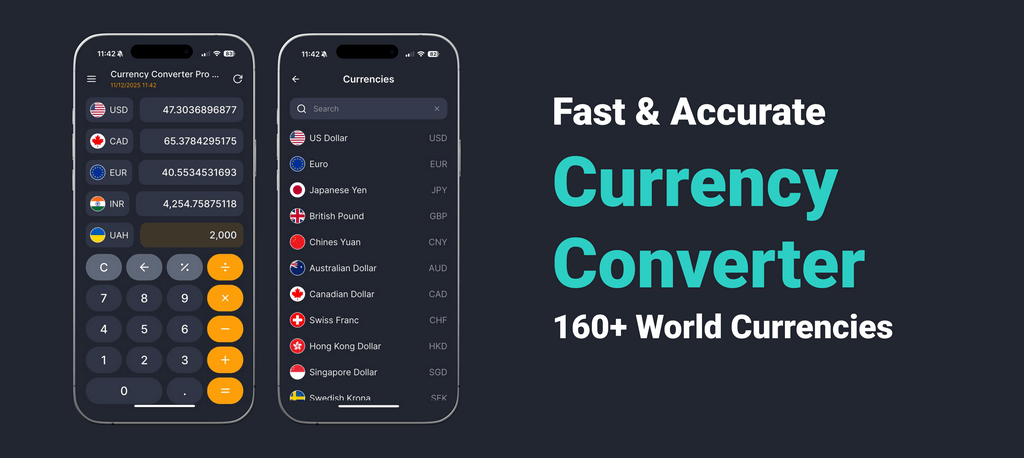
> 💡 For Real-Time USD Exchange Rates: Exchange rates change throughout each trading day. For the most up-to-date USD conversion rates updated in real-time, download our Currency Converter Pro Live app: > - Download on the App Store - Get live rates on iPhone and iPad > - Get it on Google Play - Get live rates on Android devices > > The app provides real-time exchange rates for 160+ world currencies, updated throughout each trading day based on live market data.
Why USD Conversions Are Essential
The US Dollar's status as the world's primary reserve currency makes USD conversions fundamental to global finance. Over 60% of global trade is denominated in USD, and central banks worldwide hold USD as reserves. This dominance means USD conversions affect virtually every international transaction.
Whether you're a traveler converting USD for a European vacation, a business importing goods priced in dollars, or an investor diversifying a portfolio, understanding USD conversion rates and methods is crucial. The articles and conversion tools in this section help you navigate USD conversions confidently, ensuring you get fair rates and understand the factors affecting exchange rates.
Understanding USD Exchange Rate Dynamics
USD exchange rates fluctuate based on multiple factors:
- Federal Reserve Policy: Interest rate decisions and monetary policy statements significantly impact USD strength
- Economic Data: US employment, inflation, and GDP reports drive currency movements
- Global Risk Sentiment: During crises, USD often strengthens as a safe-haven currency
- Trade Balances: US trade deficits and surpluses influence long-term USD trends
- Geopolitical Events: Wars, sanctions, and political instability affect USD demand
Understanding these dynamics helps you time conversions better and choose the right moment to exchange USD for other currencies or vice versa.
Practical USD Conversion Tips
Getting the best rates on USD conversions requires understanding:
- Timing Matters: Exchange rates change throughout each trading day, with major moves during London and New York trading sessions
- Provider Differences: Banks, online services, and exchange offices offer different rates—compare before converting
- Large Amounts: For significant conversions, negotiate rates or use specialized services that offer better pricing
- Avoid Hidden Fees: Look beyond the exchange rate—some providers add fees that aren't immediately obvious
- Use Real-Time Rates: Currency converter apps provide live rates, helping you make informed decisions
The conversion guides in this section provide detailed information on each USD currency pair, including average rates, volatility characteristics, and practical use cases.
USD to Major Currencies
Major currencies are the most traded and liquid currencies in the world. These pairs typically have the tightest spreads and most stable exchange rates.
USD to EUR (US Dollar to Euro)
- URL: /usd-to-eur
- Average Rate (2025): 1 USD = 0.92 EUR
- Volume: One of the most traded currency pairs globally
- Use Cases: European travel, trade, investment
USD to GBP (US Dollar to British Pound)
- URL: /usd-to-gbp
- Average Rate (2025): 1 USD = 0.79 GBP
- Volume: Major currency pair with high liquidity
- Use Cases: UK travel, trade, investment
USD to JPY (US Dollar to Japanese Yen)
- URL: /usd-to-jpy
- Average Rate (2025): 1 USD = 150 JPY
- Volume: Most traded Asian currency pair
- Use Cases: Japanese travel, trade, investment
USD to CNY (US Dollar to Chinese Yuan)
- URL: /usd-to-cny
- Average Rate (2025): 1 USD = 7.25 CNY
- Volume: Growing importance in global trade
- Use Cases: Chinese trade, investment, travel
USD to CAD (US Dollar to Canadian Dollar)
- URL: /usd-to-cad
- Average Rate (2025): 1 USD = 1.35 CAD
- Volume: Major North American pair
- Use Cases: Cross-border trade, travel
USD to AUD (US Dollar to Australian Dollar)
- URL: /usd-to-aud
- Average Rate (2025): 1 USD = 1.52 AUD
- Volume: Commodity currency pair
- Use Cases: Australian travel, trade, investment
USD to CHF (US Dollar to Swiss Franc)
- URL: /usd-to-chf
- Average Rate (2025): 1 USD = 0.88 CHF
- Volume: Safe-haven currency pair
- Use Cases: Swiss investment, travel
Major Currencies to USD
EUR to USD (Euro to US Dollar)
- URL: /eur-to-usd
- Average Rate (2025): 1 EUR = 1.09 USD
- Volume: Most traded currency pair
- Use Cases: European exports, investment
GBP to USD (British Pound to US Dollar)
- URL: /gbp-to-usd
- Average Rate (2025): 1 GBP = 1.27 USD
- Volume: Major currency pair
- Use Cases: UK exports, investment
JPY to USD (Japanese Yen to US Dollar)
- URL: /jpy-to-usd
- Average Rate (2025): 1 JPY = 0.0067 USD
- Volume: Most traded Asian pair
- Use Cases: Japanese exports, investment
CNY to USD (Chinese Yuan to US Dollar)
- URL: /cny-to-usd
- Average Rate (2025): 1 CNY = 0.14 USD
- Volume: Growing importance
- Use Cases: Chinese exports, trade
CAD to USD (Canadian Dollar to US Dollar)
- URL: /cad-to-usd
- Average Rate (2025): 1 CAD = 0.74 USD
- Volume: Major North American pair
- Use Cases: Canadian exports, trade
AUD to USD (Australian Dollar to US Dollar)
- URL: /aud-to-usd
- Average Rate (2025): 1 AUD = 0.66 USD
- Volume: Commodity currency pair
- Use Cases: Australian exports, investment
CHF to USD (Swiss Franc to US Dollar)
- URL: /chf-to-usd
- Average Rate (2025): 1 CHF = 1.14 USD
- Volume: Safe-haven currency pair
- Use Cases: Swiss exports, investment
USD to Asian Currencies
Asian currencies represent some of the world's largest economies and most dynamic markets.
USD to INR (US Dollar to Indian Rupee)
- URL: /usd-to-inr
- Average Rate (2025): 1 USD = 83 INR
- Volume: One of the most searched currency pairs
- Use Cases: Indian remittances, trade, investment
USD to PHP (US Dollar to Philippine Peso)
- URL: /usd-to-php
- Average Rate (2025): 1 USD = 56 PHP
- Volume: High remittance volume
- Use Cases: Philippine remittances, trade
USD to KRW (US Dollar to South Korean Won)
- URL: /usd-to-krw
- Average Rate (2025): 1 USD = 1,350 KRW
- Volume: Major Asian currency pair
- Use Cases: Korean trade, investment
USD to THB (US Dollar to Thai Baht)
- URL: /usd-to-thb
- Average Rate (2025): 1 USD = 36 THB
- Volume: Tourism-driven conversions
- Use Cases: Thai travel, trade
USD to SGD (US Dollar to Singapore Dollar)
- URL: /usd-to-sgd
- Average Rate (2025): 1 USD = 1.35 SGD
- Volume: Financial hub currency
- Use Cases: Singapore trade, investment
USD to HKD (US Dollar to Hong Kong Dollar)
- URL: /usd-to-hkd
- Average Rate (2025): 1 USD = 7.82 HKD
- Volume: Pegged currency pair
- Use Cases: Hong Kong trade, investment
USD to IDR (US Dollar to Indonesian Rupiah)
- URL: /usd-to-idr
- Average Rate (2025): 1 USD = 15,800 IDR
- Volume: Major Southeast Asian pair
- Use Cases: Indonesian trade, investment
USD to PKR (US Dollar to Pakistani Rupee)
- URL: /usd-to-pkr
- Average Rate (2025): 1 USD = 278 PKR
- Volume: High remittance volume
- Use Cases: Pakistani remittances, trade
Asian Currencies to USD
INR to USD (Indian Rupee to US Dollar)
- URL: /inr-to-usd
- Average Rate (2025): 1 INR = 0.012 USD
- Volume: One of the most searched pairs
- Use Cases: Indian exports, investment
PHP to USD (Philippine Peso to US Dollar)
- URL: /php-to-usd
- Average Rate (2025): 1 PHP = 0.018 USD
- Volume: High remittance volume
- Use Cases: Philippine exports, remittances
KRW to USD (South Korean Won to US Dollar)
- URL: /krw-to-usd
- Average Rate (2025): 1 KRW = 0.00074 USD
- Volume: Major Asian pair
- Use Cases: Korean exports, investment
THB to USD (Thai Baht to US Dollar)
- URL: /thb-to-usd
- Average Rate (2025): 1 THB = 0.028 USD
- Volume: Tourism-driven
- Use Cases: Thai exports, travel
SGD to USD (Singapore Dollar to US Dollar)
- URL: /sgd-to-usd
- Average Rate (2025): 1 SGD = 0.74 USD
- Volume: Financial hub currency
- Use Cases: Singapore exports, investment
HKD to USD (Hong Kong Dollar to US Dollar)
- URL: /hkd-to-usd
- Average Rate (2025): 1 HKD = 0.13 USD
- Volume: Pegged currency pair
- Use Cases: Hong Kong exports, trade
IDR to USD (Indonesian Rupiah to US Dollar)
- URL: /idr-to-usd
- Average Rate (2025): 1,000 IDR = 0.063 USD
- Volume: Major Southeast Asian pair
- Use Cases: Indonesian exports, investment
PKR to USD (Pakistani Rupee to US Dollar)
- URL: /pkr-to-usd
- Average Rate (2025): 1 PKR = 0.0036 USD
- Volume: High remittance volume
- Use Cases: Pakistani exports, remittances
VND to USD (Vietnamese Dong to US Dollar)
- URL: /vnd-to-usd
- Average Rate (2025): 1,000 VND = 0.041 USD
- Volume: Growing Southeast Asian economy
- Use Cases: Vietnamese exports, remittances
USD to Americas Currencies
USD to MXN (US Dollar to Mexican Peso)
- URL: /usd-to-mxn
- Average Rate (2025): 1 USD = 17.5 MXN
- Volume: Major Latin American pair
- Use Cases: Mexican trade, remittances
USD to BRL (US Dollar to Brazilian Real)
- URL: /usd-to-brl
- Average Rate (2025): 1 USD = 5.0 BRL
- Volume: Major emerging market pair
- Use Cases: Brazilian trade, investment
USD to ZAR (US Dollar to South African Rand)
- URL: /usd-to-zar
- Average Rate (2025): 1 USD = 18.5 ZAR
- Volume: Major African currency pair
- Use Cases: South African trade, investment
Americas and African Currencies to USD
MXN to USD (Mexican Peso to US Dollar)
- URL: /mxn-to-usd
- Average Rate (2025): 1 MXN = 0.057 USD
- Volume: Major Latin American pair
- Use Cases: Mexican exports, remittances
BRL to USD (Brazilian Real to US Dollar)
- URL: /brl-to-usd
- Average Rate (2025): 1 BRL = 0.20 USD
- Volume: Major emerging market pair
- Use Cases: Brazilian exports, investment
ZAR to USD (South African Rand to US Dollar)
- URL: /zar-to-usd
- Average Rate (2025): 1 ZAR = 0.054 USD
- Volume: Major African currency pair
- Use Cases: South African exports, investment
USD to Middle East and Other Currencies
USD to AED (US Dollar to UAE Dirham)
- URL: /aed-to-usd - Convert UAE Dirham to US Dollar
- Average Rate (2025): 1 USD = 3.67 AED
- Volume: Pegged currency pair
- Use Cases: UAE trade, investment
Middle East and Other Currencies to USD
AED to USD (UAE Dirham to US Dollar)
- URL: /aed-to-usd
- Average Rate (2025): 1 AED = 0.27 USD
- Volume: Pegged currency pair
- Use Cases: UAE exports, trade
SEK to USD (Swedish Krona to US Dollar)
- URL: /sek-to-usd
- Average Rate (2025): 1 SEK = 0.095 USD
- Volume: Scandinavian currency pair
- Use Cases: Swedish exports, investment
NZD to USD (New Zealand Dollar to US Dollar)
- URL: /nzd-to-usd
- Average Rate (2025): 1 NZD = 0.61 USD
- Volume: Commodity currency pair
- Use Cases: New Zealand exports, investment
How to Use USD Conversions
Step 1: Choose Your Currency Pair
Select the currency you want to convert to or from USD. Use the links above to access detailed conversion pages with live rates, historical data, and currency information.
Step 2: Check the Exchange Rate
Each currency pair page provides:
- Current exchange rate (2025 average)
- Real-time rate updates (via app)
- Historical rate data
- Factors affecting the rate
Step 3: Calculate Your Conversion
Use the conversion formula or our Currency Calculator for quick calculations. For real-time conversions, download the Currency Converter Pro Live app.
Step 4: Consider Fees and Margins
Remember that exchange rates include margins. Banks typically charge 3-5%, money transfer services 1-3%, and exchange offices 5-10% or more.
Factors Affecting USD Exchange Rates
Economic Indicators
- Interest Rates: US Federal Reserve policy affects USD strength
- Inflation: US inflation relative to other countries
- GDP Growth: Economic growth differentials
- Employment Data: US job market strength
Global Factors
- Trade Balances: US trade deficit/surplus
- Geopolitical Events: Global stability affects USD as safe haven
- Commodity Prices: Oil and gold prices often correlate with USD
- Central Bank Policies: Other central banks' policies affect relative strength
Market Sentiment
- Risk Appetite: USD strengthens during uncertainty
- Investor Confidence: Global investment flows
- Currency Interventions: Central bank actions
Historical USD Performance
The US Dollar has maintained its position as the world's primary reserve currency since the Bretton Woods system in 1944. Key historical milestones:
- 1944-1971: Bretton Woods system with USD pegged to gold
- 1971: Nixon ends gold convertibility, USD becomes fiat currency
- 1980s: Strong USD due to high interest rates
- 1990s-2000s: USD dominance in global trade
- 2008-2009: USD strengthens during financial crisis
- 2010s: USD remains dominant despite challenges
- 2020s: USD strength during COVID-19 and economic uncertainty
Frequently Asked Questions (FAQ)
What is the most traded USD currency pair?
The EUR/USD (Euro to US Dollar) is the most traded currency pair globally, followed by USD/JPY and GBP/USD.
Why is USD the world's reserve currency?
The US Dollar became the world's reserve currency due to the size of the US economy, stability of US institutions, and the depth of US financial markets. Most central banks hold USD as reserves.
How often do USD exchange rates change?
USD exchange rates update continuously during market hours (24 hours a day, 5 days a week). Rates can change multiple times per minute during active trading.
What affects USD exchange rates the most?
The most significant factors are US Federal Reserve interest rate decisions, US economic growth, inflation differentials, trade balances, and global economic conditions.
Is it better to convert USD in the US or abroad?
Generally, you get better rates in the US for larger amounts. However, consider convenience, security, and immediate need. For small amounts, the difference may not justify the hassle.
Can I convert USD offline?
Yes, you can convert currency offline at banks, currency exchange offices, or authorized dealers. However, rates may be less favorable than online services. Some currency converter apps also work offline using cached exchange rates.
What is the best way to convert large amounts of USD?
For large amounts, online money transfer services often offer better rates than banks. Always compare total costs, including fees and margins, before converting.
Why are some USD pairs more volatile than others?
Volatility depends on economic stability, liquidity, and market depth. Major pairs (EUR, GBP, JPY) are typically less volatile than emerging market pairs (INR, BRL, ZAR).
Related Resources
- Currency Converter - Main hub page with all currency information
- Major Currencies - Guide to major world currencies
- Asian Currencies - Guide to Asian currency pairs
- Currency Calculator - Interactive currency conversion calculator
Data Source and Trust
Our exchange rate data is aggregated from multiple international sources including:
- Interbank foreign exchange markets
- US Federal Reserve data
- International Monetary Fund (IMF) statistics
- Major financial institutions and currency data providers
Rates are updated in real-time during market hours and reflect mid-market rates (the average between buy and sell prices). Actual rates you receive from banks or exchange services may include margins of 2-10% depending on the provider.
For official exchange rates and monetary policy information, visit the US Federal Reserve or the International Monetary Fund.
Last updated: January 18, 2026