

USD to AUD - Convert US Dollar to Australian Dollar
2025 Average Rate: 1 USD = 1.52 AUD
The USD to AUD exchange rate is one of the most important currency pairs globally, connecting the world's largest economy with Australia, a major commodity-exporting nation. Throughout 2025, 1 US Dollar averaged approximately 1.52 Australian Dollars at mid-market rates. This conversion is essential for travelers, businesses, investors, and anyone dealing with transactions between the United States and Australia.
The relationship between the US Dollar and Australian Dollar reflects complex economic factors including commodity prices (especially iron ore, coal, and gold), trade relationships, monetary policy differences, tourism, and economic policies of both countries. Understanding how to convert USD to AUD accurately and staying informed about exchange rate movements can help you make better financial decisions.
Average USD to AUD Exchange Rate in 2025
2025 Annual Average:
- 1 USD = 1.52 AUD (average mid-market rate for 2025)
- Range: The rate fluctuated between approximately 1.48 and 1.56 AUD throughout the year
- Rate type: Mid-market rate (average between buy and sell prices)
💡 For Real-Time Exchange Rates
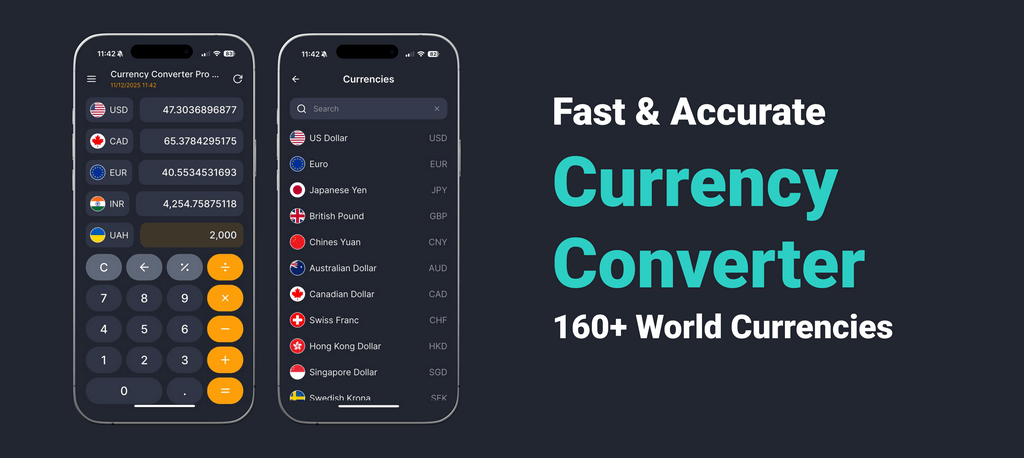
Exchange rates change throughout each trading day. For the most up-to-date USD to AUD rates updated in real-time, download our Currency Converter Pro Live app:
- Download on the App Store - Get live rates on iPhone and iPad
- Get it on Google Play - Get live rates on Android devices
The app provides real-time exchange rates for 160+ world currencies, updated throughout each trading day based on live market data.
The mid-market rate represents the midpoint between what buyers are willing to pay and what sellers are asking for in global currency markets. When you exchange currency through banks or money transfer services, you'll typically receive a rate that includes a margin of 2-5% above or below this mid-market rate.
Quick Conversion Examples (Based on 2025 Average Rate)
- $1 USD = $1.52 AUD
- $10 USD = $15.20 AUD
- $100 USD = $152.00 AUD
- $1,000 USD = $1,520.00 AUD
- $10,000 USD = $15,200.00 AUD
These conversions use the 2025 average mid-market rate and are for informational purposes only. Actual rates you receive may vary based on the service provider, transfer amount, and payment method. For real-time rates, use the Currency Converter Pro Live app available in the header above.
How to Convert USD to AUD
Converting US Dollars to Australian Dollars is straightforward once you understand the process:
Step 1: Determine the Exchange Rate
Check the USD to AUD rate from reliable sources such as the Reserve Bank of Australia (RBA), US Federal Reserve, major financial institutions, or currency converter apps. The average rate in 2025 was approximately 1.52 AUD per USD, but rates fluctuate throughout each trading day based on market conditions. For real-time rates, consider using a currency converter app like Currency Converter Pro Live available in the header above.
Step 2: Calculate the Conversion
Multiply the amount in USD by the exchange rate. For example, using the 2025 average rate:
- If 1 USD = 1.52 AUD (2025 average)
- Then 100 USD = 100 × 1.52 = 152.00 AUD
Note: For real-time calculations with current rates, use the Currency Converter Pro Live app available in the header above.
Step 3: Choose Your Conversion Method
You can convert USD to AUD through:
- Banks: Traditional banks offer currency exchange services, typically with higher fees (3-5% margin)
- Money transfer services: Online services like Wise, Remitly, or Xoom often provide better rates (1-3% margin)
- Currency exchange offices: Physical locations at airports or tourist areas, usually with less favorable rates (5-10% margin)
- Mobile apps: Currency converter apps provide real-time rates and some offer conversion services
Step 4: Consider Fees and Margins
Remember that the rate you see (mid-market rate) is not the rate you'll receive. Service providers add margins and fees:
- Banks: Typically 3-5% margin
- Money transfer services: 1-3% margin
- Exchange offices: 5-10% margin or more
Always check the total cost, including fees, before completing a transaction.
Factors Affecting USD to AUD Exchange Rate
The USD to AUD exchange rate is influenced by multiple economic and geopolitical factors:
Commodity Prices
Australia is the world's largest iron ore exporter, and iron ore prices significantly affect AUD strength. Australia is also a major coal and gold exporter, and these commodity prices impact currency value. The AUD is often called a "commodity currency" due to its correlation with commodity prices.
Trade Relationships
The two countries are major trading partners, with significant bilateral trade. Australia's trade with China (especially commodities) affects AUD, which then impacts USD/AUD. Trade surpluses or deficits impact currency demand. Australia's resource exports create demand for AUD.
Monetary Policy
Interest rate differentials between the Federal Reserve and Reserve Bank of Australia directly impact currency values. When US interest rates are higher than Australian rates, the USD tends to strengthen relative to AUD. Changes in US Federal Reserve policies affect global USD strength. Changes in Reserve Bank of Australia (RBA) policies affect AUD strength.
Economic Indicators
Key economic data affects the exchange rate:
- GDP growth: Strong economic growth in either country can strengthen its currency
- Inflation rates: Higher inflation in Australia relative to the US can weaken the AUD
- Employment data: Strong employment numbers in either country can influence currency strength
- Mining sector performance: Australia's mining sector performance affects economic outlook and currency value
Tourism
Millions of US tourists visit Australia annually, creating demand for AUD. Tourism peaks affect currency demand. Tourism is a major source of foreign currency for Australia.
Geopolitical Events
US-Australia or China-Australia trade disputes can cause currency volatility. Political developments in either country can impact investor confidence. Global economic uncertainty can cause currency volatility. Regional tensions in the Asia-Pacific region can affect AUD.
Historical USD to AUD Exchange Rate
The USD to AUD exchange rate has experienced significant changes over the decades:
Recent History (2020-2026)
- 2020: The rate averaged around 1.40-1.45 AUD per USD, with volatility during the COVID-19 pandemic
- 2021: The rate strengthened to around 1.35-1.40 AUD per USD, driven by commodity price recovery
- 2022: The rate weakened to around 1.45-1.50 AUD per USD, influenced by US Federal Reserve rate hikes
- 2023: Continued volatility, with rates ranging from 1.48 to 1.55 AUD per USD
- 2024: The rate stabilized around 1.50-1.53 AUD per USD
- 2025: Current levels around 1.48-1.56 AUD per USD, reflecting ongoing economic factors
Long-term Trends
- 1990s: The rate was around 1.30-1.50 AUD per USD
- 2000s: Continued volatility, with rates ranging from 1.20 to 1.80 AUD per USD
- 2010s: Further volatility, with rates reaching 0.95-1.10 AUD per USD (AUD stronger than USD)
- 2020s: Continued volatility, with rates generally around 1.40-1.60 AUD per USD
Notable Historical Events
- 2008-2009: Global financial crisis caused AUD weakness, with rate reaching 1.60+ AUD per USD
- 2011-2012: Commodity boom caused AUD strength, with rate reaching 0.95-1.00 AUD per USD (AUD stronger)
- 2015-2016: Commodity price collapse caused AUD weakness, with rate reaching 1.40+ AUD per USD
- 2020: COVID-19 pandemic caused further AUD weakness, with rate reaching 1.60+ AUD per USD
Interesting Facts About USD to AUD Conversion
- Commodity Currency: The Australian Dollar is often called a "commodity currency" because its value is closely tied to commodity prices, especially iron ore, coal, and gold
- Trade Partnership: The US and Australia are major trading partners, with significant bilateral trade in goods and services
- Tourism: Millions of US tourists visit Australia annually, making tourism a major source of foreign currency and USD to AUD conversion
- Mining Sector: Australia's mining sector is a major driver of the economy and affects AUD value through commodity exports
- Interest Rate Carry Trade: The AUD has historically been used in carry trades due to interest rate differentials with other currencies
- China Connection: Australia's trade relationship with China (especially commodities) indirectly affects USD/AUD through commodity prices
- Resource Exports: Australia is a major exporter of natural resources, making the AUD sensitive to global commodity demand
Common Use Cases for USD to AUD Conversion
Travel
Travelers visiting Australia from the United States need to convert USD to AUD for local expenses. Understanding the current rate helps budget effectively for hotels, meals, transportation, and shopping.
Business
US businesses importing from or exporting to Australia need accurate USD to AUD conversion for pricing, invoicing, and financial planning. Exchange rate fluctuations directly impact profit margins.
Investment
Investors looking to invest in Australian stocks and securities need to convert USD to AUD. Currency movements can enhance or reduce investment returns, making exchange rate awareness crucial for portfolio management.
Education
Students studying in Australia from the US need currency conversion for tuition fees and living expenses. Rate movements can significantly affect education costs.
Remittances
People sending money from the US to family in Australia need currency conversion. Regular remittances create ongoing conversion demand.
Frequently Asked Questions (FAQ)
Data Source and Trust
How we calculate exchange rates
The exchange rate information provided in this guide is based on:
- Mid-market rates: Average rates between buy and sell prices in global currency markets
- Reserve Bank of Australia (RBA): Official exchange rates and monetary policy data
- US Federal Reserve: US monetary policy and economic data
- International Monetary Fund (IMF): Global currency statistics and economic indicators
- Interbank markets: Real-time trading data from major financial institutions
Rates are updated in real-time during market hours and reflect mid-market rates (the average between buy and sell prices). Actual rates you receive from banks or exchange services may include margins of 2-10% depending on the provider.
Important Note: Exchange rates fluctuate throughout each trading day. The rates mentioned (2025 average of 1.52 AUD per USD) are for informational purposes and represent historical averages, not current real-time rates. For the most up-to-date exchange rates, use the Currency Converter Pro Live app available in the header above, which provides real-time rates updated throughout each trading day.
For official exchange rates and monetary policy information, visit the Reserve Bank of Australia or the US Federal Reserve.
Last updated: January 2026