

European Currencies - Convert EUR, GBP, CHF, SEK, PLN
European currencies represent some of the world's most stable and influential monetary systems, from the Euro used by 19 European Union member states to the British Pound, one of the oldest currencies still in use. Understanding European currency pairs is essential for international trade, travel, investment, and financial planning, as Europe remains one of the world's largest economic regions.
The major European currencies include the Euro (EUR), British Pound (GBP), Swiss Franc (CHF), Swedish Krona (SEK), and Polish Zloty (PLN). These currencies reflect the diversity of European economies, from the unified Eurozone to independent monetary policies in the UK, Switzerland, and other European nations.
What Are European Currencies?
European currencies represent the monetary systems of countries across the European continent, which includes:
- Eurozone: 19 countries using the Euro (EUR)
- United Kingdom: British Pound (GBP)
- Switzerland: Swiss Franc (CHF)
- Sweden: Swedish Krona (SEK)
- Poland: Polish Zloty (PLN)
These currencies share several characteristics:
- Economic Stability: Most European currencies represent stable, developed economies
- High Liquidity: European currencies are among the most traded globally
- Central Bank Independence: Strong, independent central banks manage monetary policy
- Global Influence: European currencies significantly impact global financial markets
- Tourism and Trade: High volumes of tourism and international trade
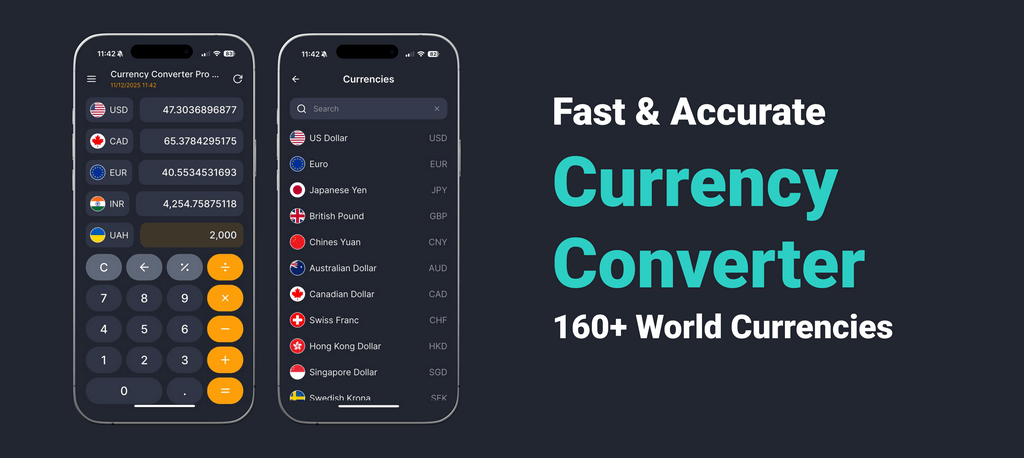
> 💡 For Real-Time European Currency Exchange Rates: Exchange rates change throughout each trading day. For the most up-to-date European currency rates updated in real-time, download our Currency Converter Pro Live app: > - Download on the App Store - Get live rates on iPhone and iPad > - Get it on Google Play - Get live rates on Android devices > > The app provides real-time exchange rates for 160+ world currencies, updated throughout each trading day based on live market data.
European Currencies in Global Finance
European currencies play crucial roles in global finance, from the Euro's status as the world's second-largest reserve currency to London's position as a leading financial center. Understanding European currency pairs is essential for international trade, investment, and travel, as Europe remains one of the world's largest economic regions.
The European currency landscape includes:
- The Euro (EUR): Used by 19 countries, representing over 340 million people
- The British Pound (GBP): One of the oldest currencies, backed by London's financial markets
- The Swiss Franc (CHF): A safe-haven currency known for stability
- Nordic Currencies: SEK and others representing stable, developed economies
These currencies' stability and global acceptance make them ideal for international transactions and portfolio diversification.
Characteristics of European Currency Markets
European currencies share several important characteristics:
- Economic Stability: Most European currencies represent developed economies with strong institutions
- Central Bank Independence: European central banks (ECB, Bank of England, Swiss National Bank) are highly respected
- High Liquidity: European currencies are among the most traded globally
- Safe-Haven Status: CHF and, to some extent, EUR serve as safe havens during global uncertainty
- Tourism and Trade: High volumes of tourism and international trade support currency demand
These characteristics make European currencies:
- Reliable for long-term investments
- Suitable for hedging currency risk
- Attractive for international trade
- Convenient for travel and tourism
Navigating European Currency Conversions
When converting European currencies, consider:
- ECB Policy: European Central Bank decisions significantly impact EUR and affect other European currencies
- Brexit Impact: The UK's departure from the EU continues to influence GBP exchange rates
- Swiss Franc Strength: CHF often strengthens during global uncertainty due to its safe-haven status
- Trading Sessions: European currencies are most liquid during London trading hours (8 AM - 5 PM GMT)
- Cross-Border Trade: EUR's use across 19 countries simplifies trade within the Eurozone
The detailed currency guides in this section help you understand each European currency's unique characteristics and conversion considerations.
European Currencies Overview
Euro (EUR)
The Euro is the official currency of 19 European Union member states, collectively known as the Eurozone. It is the second most traded currency globally and serves as a major reserve currency.
- Symbol: €
- ISO Code: EUR
- Central Bank: European Central Bank (ECB)
- Key Features: Used by over 340 million people, stable monetary policy, major reserve currency
British Pound (GBP)
The British Pound Sterling is the oldest currency still in use and the official currency of the United Kingdom. It is one of the most traded currencies globally.
- Symbol: £
- ISO Code: GBP
- Central Bank: Bank of England
- Key Features: Historical significance, major financial center (London), stable economy
Swiss Franc (CHF)
The Swiss Franc is the official currency of Switzerland and Liechtenstein. It is known for its stability and safe-haven status.
- Symbol: Fr. or CHF
- ISO Code: CHF
- Central Bank: Swiss National Bank (SNB)
- Key Features: Safe-haven currency, low inflation, financial center
Swedish Krona (SEK)
The Swedish Krona is the official currency of Sweden. It is a stable currency from a developed Nordic economy.
- Symbol: kr
- ISO Code: SEK
- Central Bank: Sveriges Riksbank
- Key Features: Stable economy, high standard of living, export-oriented
Polish Zloty (PLN)
The Polish Zloty is the official currency of Poland, one of the largest economies in Central and Eastern Europe.
- Symbol: zł
- ISO Code: PLN
- Central Bank: National Bank of Poland
- Key Features: Growing economy, EU member, emerging market
USD to European Currencies
USD to EUR (US Dollar to Euro)
- URL: /usd-to-eur
- Average Rate (2025): 1 USD = 0.92 EUR
- Volume: Most traded currency pair globally
- Characteristics: High liquidity, major reserve currencies
- Use Cases: European travel, trade, investment
USD to GBP (US Dollar to British Pound)
- URL: /usd-to-gbp
- Average Rate (2025): 1 USD = 0.79 GBP
- Volume: Major currency pair with high liquidity
- Characteristics: Historical significance, major financial center
- Use Cases: UK travel, trade, investment
USD to CHF (US Dollar to Swiss Franc)
- URL: /usd-to-chf
- Average Rate (2025): 1 USD = 0.88 CHF
- Volume: Safe-haven currency pair
- Characteristics: Safe-haven currency, low volatility
- Use Cases: Swiss investment, travel
USD to SEK (US Dollar to Swedish Krona)
- URL: /sek-to-usd - Convert Swedish Krona to US Dollar
- Average Rate (2025): 1 USD = 10.5 SEK
- Volume: Scandinavian currency pair
- Characteristics: Stable economy, export-oriented
- Use Cases: Swedish trade, investment
European Currencies to USD
EUR to USD (Euro to US Dollar)
- URL: /eur-to-usd
- Average Rate (2025): 1 EUR = 1.09 USD
- Volume: Most traded currency pair globally
- Characteristics: High liquidity, major reserve currencies
- Use Cases: European exports, investment
GBP to USD (British Pound to US Dollar)
- URL: /gbp-to-usd
- Average Rate (2025): 1 GBP = 1.27 USD
- Volume: Major currency pair
- Characteristics: Historical significance, major financial center
- Use Cases: UK exports, investment
CHF to USD (Swiss Franc to US Dollar)
- URL: /chf-to-usd
- Average Rate (2025): 1 CHF = 1.14 USD
- Volume: Safe-haven currency pair
- Characteristics: Safe-haven currency, low volatility
- Use Cases: Swiss exports, investment
SEK to USD (Swedish Krona to US Dollar)
- URL: /sek-to-usd
- Average Rate (2025): 1 SEK = 0.095 USD
- Volume: Scandinavian currency pair
- Characteristics: Stable economy, export-oriented
- Use Cases: Swedish exports, investment
Why European Currencies Matter
Economic Powerhouse
Europe represents one of the world's largest economic regions, with the Eurozone alone having a GDP comparable to the United States. European currencies facilitate trillions of dollars in international trade annually.
Financial Centers
Europe is home to major financial centers including London, Frankfurt, Zurich, and Paris. These centers drive significant currency trading volumes and influence global financial markets.
Tourism
Europe is the world's most visited region, with millions of tourists requiring currency conversion. Understanding European exchange rates is essential for travelers.
Investment Opportunities
European currencies offer stable investment opportunities, with many European countries having strong economic fundamentals and stable political systems.
Trade Relationships
Europe has extensive trade relationships with the rest of the world, making European currencies essential for international commerce.
Factors Affecting European Currency Exchange Rates
Economic Indicators
- GDP Growth: Economic growth differentials between European countries and other regions
- Inflation Rates: European Central Bank and national central bank inflation targets
- Employment Data: Labor market conditions across Europe
- Trade Balances: European trade surpluses and deficits
Monetary Policy
- ECB Policy: European Central Bank interest rate decisions affect EUR
- Bank of England Policy: BoE decisions affect GBP
- SNB Policy: Swiss National Bank policy affects CHF
- National Central Banks: Individual central bank policies for SEK, PLN
Geopolitical Events
- EU Integration: European Union developments affect EUR
- Brexit: UK's departure from EU continues to affect GBP
- Political Stability: Political events across Europe
- Global Crises: European currencies often serve as safe havens
Regional Factors
- Eurozone Stability: Economic conditions across Eurozone countries
- Migration: Population movements affect currency demand
- Energy Prices: Europe's energy dependency affects currencies
- Regional Trade: Intra-European trade relationships
Frequently Asked Questions (FAQ)
What are the major European currencies?
The major European currencies are EUR, GBP, CHF, SEK, and PLN. These represent some of the world's most stable and influential economies.
Why is the Euro important?
The Euro is important because it is used by 19 countries, making it the second most traded currency globally and a major reserve currency. It facilitates trade across the Eurozone and beyond.
How does Brexit affect European currencies?
Brexit has created volatility in GBP and affected EUR, as the UK's departure from the EU changed trade relationships and economic dynamics.
Are European currencies safe-haven currencies?
The Swiss Franc (CHF) is considered a safe-haven currency. The Euro and British Pound can also serve as safe havens during certain crises, though to a lesser extent than CHF.
How often do European currency rates change?
European currency exchange rates update continuously during market hours (24 hours a day, 5 days a week). Rates can change multiple times per minute during active trading.
What affects European currency rates the most?
The most significant factors are central bank policies (ECB, BoE, SNB), economic growth, inflation rates, trade balances, and geopolitical events.
Related Resources
- Currency Converter - Main hub page with all currency information
- Major Currencies - Guide to major world currencies
- USD Conversions - Complete guide to USD currency pairs
- Currency Calculator - Interactive currency conversion calculator
Data Source and Trust
Our exchange rate data is aggregated from multiple international sources including:
- Interbank foreign exchange markets
- European central bank reference rates (ECB, BoE, SNB, Riksbank, NBP)
- International Monetary Fund (IMF) statistics
- Major financial institutions and currency data providers
Rates are updated in real-time during market hours and reflect mid-market rates (the average between buy and sell prices). Actual rates you receive from banks or exchange services may include margins of 2-10% depending on the provider.
For official exchange rates and monetary policy information, visit the respective European central banks or the International Monetary Fund.
Last updated: January 18, 2026