

Japanese Yen to Singapore Dollar (JPY/SGD) — Live Rate & Calculator
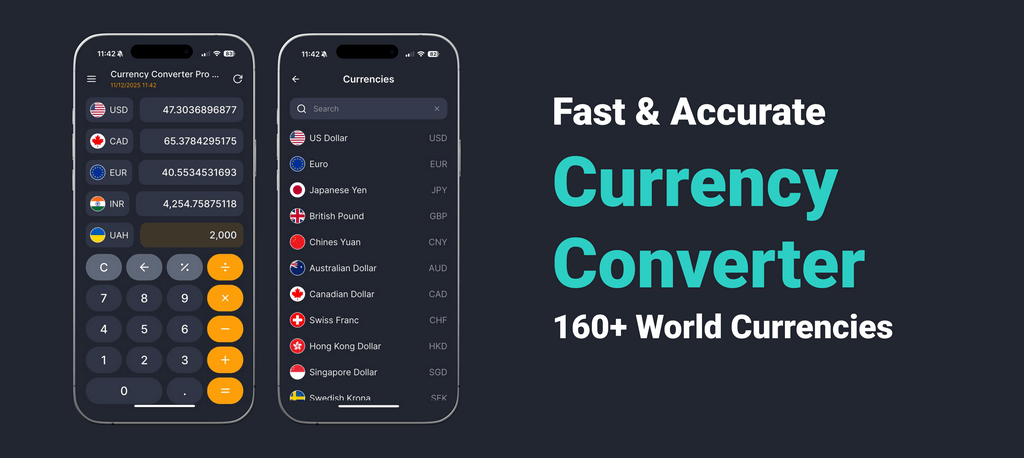
If you’re searching japanese yen to singapore dollar, you’re not doing “market theory.” You’re trying to answer a practical question fast: How many Singapore dollars is this yen amount worth right now—and what will I actually get after fees? The calculator above uses a live exchange rate to convert JPY → SGD instantly. This page is the part that helps you avoid the classic FX mistakes: confusing quote formats, underestimating spreads, and accepting “helpful” currency conversion prompts that quietly make the rate worse.
Live exchange rate: JPY to Singapore dollar today
Two things can be true at the same time:
- A reference FX rate is useful for planning.
- Your real, spendable rate depends on who converts the money (bank, card network, ATM, money changer).
For trustworthy public reference points, you can cross-check:
- Bank of Japan daily FX reference data (published each business day; based on market participants’ info; subject to revisions/corrections).
- Monetary Authority of Singapore reference exchange rates, which MAS describes as interbank averages quoted around midday and notes may differ from dealer quotes; MAS also disclaims warranties about accuracy/currentness for any purpose.
Important: “today” rates move throughout the day. A “live” number is an up-to-the-minute estimate; your bank/card will still apply its own spread and fees at execution time.
Why JPY → SGD matters in the real world
JPY/SGD is a quietly common pair because it sits on major travel and commerce routes:
- Travel & spending: Japan ↔ Singapore tourism, shopping, hotels, restaurants, transport.
- Cross-border payments: freelancers, agencies, vendors in Japan invoicing Singapore clients (or the reverse).
- Pricing sanity checks: online stores listing in JPY, but your wallet is in SGD.
And there’s a mental-math twist: yen amounts are large numbers compared with SGD. A dinner might be 6,000 JPY, while the SGD equivalent is a much smaller number—easy to misread if you flip a quote.
How to convert JPY to Singapore dollar correctly
Step 1 — Confirm the quote format (this prevents 90% of mistakes)
You’ll typically see one of these:
- A) SGD per 1 JPY
Formula: SGD = JPY × (SGD per JPY)
This is common in apps and mid-market style displays. - B) JPY per 1 SGD
Formula: SGD = JPY ÷ (JPY per SGD)
This is common in some bank tables or when the “base” currency is SGD.
Sanity check: When converting JPY → SGD, your final number in SGD should usually be much smaller than the JPY amount. If you convert 10,000 JPY and get something like 10,000 SGD, you inverted the rate.
Step 2 — Decide what “rate” you actually need (planning vs execution)
- Planning rate: good for budgeting (converter / reference rate).
- Execution rate: the one your provider actually uses (bank, card network, money changer). MAS explicitly warns its reference rates can differ from dealer quotes and disclaims warranties about fitness and timeliness.
JPY to SGD example conversions (not live rates)
Example math only. Use the calculator above for the current live exchange rate.
Assume an example rate: 1 SGD = 110 JPY (example only).
| JPY | Example rate (JPY per 1 SGD) | Approx. SGD |
|---|---|---|
| 1,000 JPY | 110 | ~9.09 SGD |
| 5,000 JPY | 110 | ~45.45 SGD |
| 10,000 JPY | 110 | ~90.91 SGD |
| 50,000 JPY | 110 | ~454.55 SGD |
| 100,000 JPY | 110 | ~909.09 SGD |
Quick mental math (fast and surprisingly accurate)
If you remember a ballpark JPY per 1 SGD number (say ~110 in this example):
- 10,000 JPY ≈ 10,000 / 110 ≈ ~91 SGD
- 1,000 JPY ≈ ~9 SGD
Your real result will be slightly lower/higher depending on spreads and fees.
Where your JPY→SGD rate changes (and why)
1) Cards (debit/credit) — often convenient, not always cheapest
Cards can be close to a network rate, but you may still pay:
- foreign transaction fees (FX markup),
- “cash advance” style fees if it’s treated as cash,
- ATM operator fees (if withdrawing).
Pro move: for large trips, check your card’s FX fee policy before you go.
2) ATMs — watch fixed fees
Even if the FX rate is decent, fixed ATM fees can destroy value when you withdraw small amounts multiple times. Fewer, larger withdrawals can be cheaper (within your comfort and safety limits).
3) Money changers — sometimes best for cash, but compare
Money changers may offer strong cash rates in competitive areas, but:
- rates worsen in tourist hotspots or airports,
- some advertise “zero commission” but widen the spread.
4) Bank transfers / remittance services — “zero fee” can be marketing
A service can advertise low/no fees while quietly using a worse exchange rate. Always compare the final SGD you receive, not just the headline fee.
The classic trap: “Pay in JPY or SGD?” (DCC)
At some terminals or ATMs you’ll be offered a choice to pay in your home currency (SGD) even though you’re being charged in Japan (JPY). That’s usually Dynamic Currency Conversion (DCC).
Visa explains that if DCC is offered, paying in your home currency can include an exchange rate and additional fees.
Practical rule:
- In Japan, if you’re physically paying there, choose JPY (local currency) unless you’ve verified the SGD option gives a better final total (rare).
- In Singapore, if you’re paying a Singapore merchant, choose SGD.
Common mistakes (and how to avoid them)
- Flipping the rate (multiplying when you should divide)
✅ Fix: memorize one anchor: if you see JPY per 1 SGD, you divide yen by that number to get SGD. - Trusting Google/mid-market as your final rate
✅ Fix: treat it as a benchmark. Execution rates include spreads/fees. MAS reference rates can differ from dealer quotes. - Accepting DCC by default
✅ Fix: choose the local currency (JPY in Japan). Visa notes DCC may include additional fees. - Ignoring fixed ATM charges
✅ Fix: plan fewer withdrawals; compare “effective cost” across one week of spending, not per transaction.
FAQ — Japanese yen to Singapore dollar
1) What is the best way to convert Japanese yen to Singapore dollars?
If you need cash: compare reputable money changers and avoid airport-only options when possible. For spending: a low-FX-fee card can be efficient. The “best” depends on your provider’s fees and your cash needs.
2) Why is the JPY to Singapore dollar rate different between providers?
Different spreads, different fee models, different update times. Even official reference series can be snapshots and are not the same as dealer quotes (MAS says its rates could differ from FX dealers and disclaims warranties).
3) Does the Bank of Japan publish FX rates I can use as a reference?
Yes—BOJ publishes daily foreign exchange rates each business day, based on market participants’ information, and notes they can be revised/corrected.
4) If a terminal asks “charge in SGD,” should I do it?
Usually no—this is often DCC, which Visa explains may include extra fees. Choose the local currency (JPY) unless you’ve confirmed the final total is better in SGD.
5) How can I estimate JPY→SGD quickly in my head?
Use the “JPY per 1 SGD” anchor. If 1 SGD is roughly ~110 JPY (example), then JPY ÷ 110 ≈ SGD.
Data sources & trust
For public reference benchmarks: Bank of Japan daily FX reference data. For SGD reference context and methodology/disclaimers: MAS exchange-rate statistics (midday interbank averages; may differ from dealer quotes; no warranty). For DCC consumer guidance: Visa’s explainer.
- Bank of Japan — Daily foreign exchange rates
- MAS eServices — Exchange rates
- Visa — Dynamic Currency Conversion (DCC)
Last updated: January 21, 2026
If you’re looking for the reverse direction (SGD → JPY) or want broader context on how SGD behaves, see SGD to JPY and the Singapore dollar currency guide.