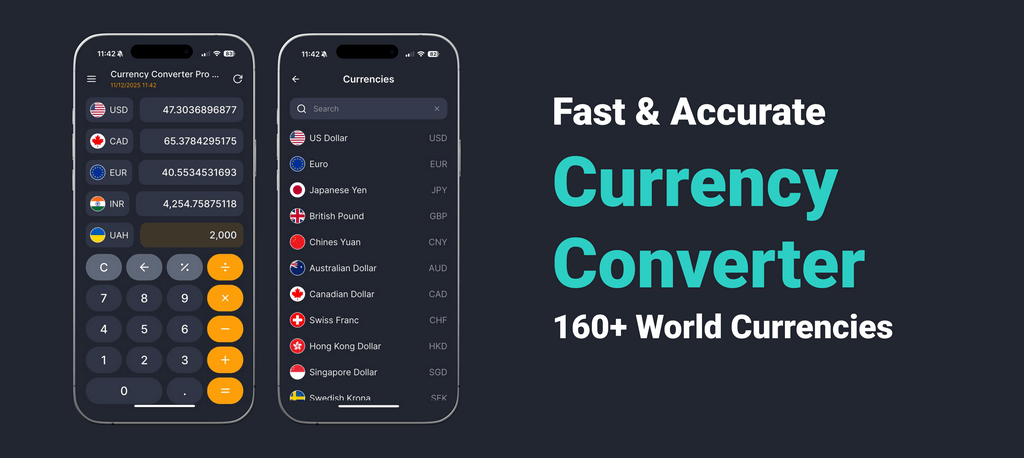


Imagine you’re at a hotel desk, an online checkout page, or an ATM abroad — and a “helpful” screen asks: Pay in USD or pay in local currency? That moment is where a lot of real-world FX value quietly disappears. Dynamic Currency Conversion (DCC) is a service that lets a merchant or ATM convert for you, usually at a worse rate than your card network plus issuer fees would have been. This guide shows how to spot DCC, how to respond in seconds, and how to sanity-check outcomes using the real converter in the header. If you find yourself checking multiple receipts or comparing options across a trip, it’s often faster to use the app.
What DCC actually is (and what it is not)
DCC is not “currency conversion” in the generic sense. It’s a specific offer: the merchant or ATM offers to convert the transaction into your home currency right now. It can look friendly, but it changes who sets the effective FX pricing.
DCC in one line
DCC = someone else converts for you.
Declining DCC typically means your card network/issuer converts (still not free, but often less costly).
The DCC prompt you’ve seen a hundred times
You’ll recognize the wording instantly: - “Pay in USD to know the exact amount” - “Guaranteed exchange rate” - “Avoid currency fluctuations” - “Pay in your home currency?”
Those phrases are designed to make the “home currency” choice feel safer. In practice, the “certainty” is often priced.
Why “guaranteed” can be expensive
The guarantee usually means: “we’re locking in our rate.” It may include a markup compared to other conversion paths.
The fastest rule of thumb (for most people, most of the time)
When you’re presented with a DCC choice:
Choose local currency.
Let your card network/issuer do the conversion.
This isn’t a moral stance; it’s a practical default that avoids paying a merchant/ATM markup on top of everything else.
Exception: If you have a measured reason (rare) — for example, you know your issuer applies unusually bad pricing and you have proof that the merchant’s DCC is better — then you can treat it like any other comparison. Measure, don’t assume.
Where DCC shows up (and why it’s sneaky)
1) Card-present checkout (shops, hotels, restaurants)
You hand over a card and the terminal suddenly asks the question. The cashier may not explain the difference, or may push the “USD” option.
2) Online checkout with “helpful” currency toggles
Some sites auto-switch display currency to match your IP or card country. If the display currency becomes the settlement currency, you may have accepted a DCC-like conversion.
3) ATMs
ATMs can offer conversion at withdrawal time. The screen may show: - “Continue with conversion?” - “Accept exchange rate?” - “Proceed in USD?”
ATMs can be the most expensive place to accept a markup because you may also pay a withdrawal fee.
Reference vs retail: why your converter won’t match the receipt
The converter (header and app) is a reference-style orientation tool. Your receipt reflects a retail product: - a network conversion rate (if you chose local currency) - plus issuer fees (sometimes) - plus merchant/ATM fees (sometimes) - or a merchant/ATM conversion rate if you accepted DCC
This is why “I saw a better rate online” is often true — but not always actionable unless you choose the right conversion path.
A simple DCC decision checklist (10 seconds, no spreadsheets)
If you’re standing at a terminal or ATM, you don’t have time to do math. Use this checklist:
1) Am I being asked to pay in my home currency? If yes, it’s probably DCC.
2) Does the screen claim certainty or guarantee? That’s a sales cue.
3) Is there a “local currency” option? Choose it.
4) Take a quick photo of the screen if it looks suspicious.
Then do a calm review later using your converter/app.
Example-only: how DCC markup changes outcomes
Example only (not a live rate): assume 1 USD = 150 JPY.
| Situation | What you choose | Example conversion path | Example “all-in” feel |
|---|---|---|---|
| Restaurant in Tokyo | Pay in JPY | Network/issuer converts | Often better than DCC |
| Restaurant in Tokyo | Pay in USD | Merchant converts (DCC) | Often worse, plus fees |
| ATM in Tokyo | Withdraw in JPY | Network/issuer converts | Better default choice |
| ATM in Tokyo | Withdraw in USD | ATM converts (DCC) | Often worst outcome |
You’re not trying to predict the exact number; you’re choosing a path that is usually priced more fairly.
The “double-hit” problem: DCC + fees
A classic bad combo is: - you accept DCC (markup in the conversion rate) - and you still pay issuer foreign transaction fees or platform fees - plus you may pay an ATM operator fee
This is why DCC can feel like it “multiplies” costs — it stacks.
Online shopping: the hidden version of DCC
Many people focus on travel, but DCC-like issues happen online too.
Currency switchers and “pay in USD” toggles
If you see a checkbox like “pay in USD,” it may route conversion through the merchant’s pricing path.
Multi-currency pricing vs card conversion
Sometimes the same store can charge: - in local currency (your card converts) - or in your home currency (merchant converts)
Default to the local currency charge unless you have a measured reason to do otherwise.
How to sanity-check a suspicious receipt
If you think you accepted DCC by accident, do this:
1) Note the currency you were charged in.
2) Compare the rough magnitude using the header converter.
3) If you see an unusual gap, look for DCC language on the receipt (“conversion fee”, “guaranteed rate”, “DCC”).
If you keep receipts during a trip, you can review them later and build your own “what to avoid” list for next time.
What to say when a cashier “helps” you choose
A simple line works: - “Local currency, please.” - “Charge me in the original currency.”
No argument needed. You’re choosing how your payment is processed.
Related pages
- Traveling or buying in Japan? Use the USD to JPY converter to sanity-check direction before you accept any conversion prompt.
- Shopping from China-based sellers? The USD to CNY converter helps you spot when a quote looks inverted.
- Mexico purchases: try the USD to MXN converter for quick comparison.
- Colombia costs: reference the USD to COP converter when checking receipts.
- UK pricing: see the USD to GBP converter to avoid mixing directions.
- Basics and terminology: US dollar (USD) currency hub .
FAQ — DCC and currency choice
Is DCC always bad?
Not always, but it’s frequently more expensive. Treat it as an offer you must actively evaluate, not a default.
What should I choose at the terminal: home currency or local currency?
Local currency is the better default in most cases.
Why do merchants push home-currency pricing?
Because DCC can generate revenue through markup and revenue-sharing arrangements.
How do I know I accepted DCC after the fact?
Look for receipts that show your home currency in a local purchase, “guaranteed rate” language, or conversion line items.
Does DCC apply to ATMs too?
Yes. ATMs can offer conversion at withdrawal — often the most expensive place to accept it.
If I decline DCC, do I still pay FX fees?
Sometimes. Your issuer may charge a foreign transaction fee or build a margin into pricing. Declining DCC usually avoids the merchant/ATM markup, but it doesn’t make FX free.
What’s the quickest way to verify direction and magnitude?
Use the real converter in the header for a fast sanity check, and use the app if you’re checking repeatedly across purchases.
Sources
- Visa: Dynamic Currency Conversion (DCC) — Visa: what DCC is and why it can be costly
- Mastercard: currency conversion info — Mastercard: currency conversion basics and card FX concepts
- ECB: reference exchange rates — ECB: reference-rate concept (helpful for ‘reference vs retail’)
- CFPB: foreign transaction fees — CFPB: foreign transaction fees overview (consumer perspective)
- BIS: payments and settlement facts — BIS: payment basics and settlement context
Educational only, not financial advice. Last updated: January 21, 2026
Advanced tips for people who travel or spend internationally often
Build a “default stack” and stop thinking about it
If you travel frequently, your best outcome comes from a consistent setup: - a card with reasonable FX terms - a habit of choosing local currency - a plan for cash (one ATM withdrawal instead of many)
Consistency prevents expensive one-off mistakes.
Why people choose the wrong option (and how to avoid it)
Humans choose the option that feels safer and more certain, especially in a foreign context. DCC is designed around that bias. A pre-committed rule (“local currency, always”) beats on-the-spot math.
The receipt test: is this a “conversion service” or a normal card charge?
If the receipt looks like a mini contract — “exchange rate provided by… guaranteed… conversion fee…” — it’s usually a conversion service.
Don’t confuse display currency with settlement currency
A website can show prices in your currency while still charging you in the merchant currency. What matters is the settlement currency on the payment confirmation page and receipt.
A note on refunds
If you accept DCC, refunds can be messy because you might be refunded in a currency and then reconverted. Keeping local-currency settlement can reduce these second-order losses.
Advanced tips for people who travel or spend internationally often
Build a “default stack” and stop thinking about it
If you travel frequently, your best outcome comes from a consistent setup: - a card with reasonable FX terms - a habit of choosing local currency - a plan for cash (one ATM withdrawal instead of many)
Consistency prevents expensive one-off mistakes.
Why people choose the wrong option (and how to avoid it)
Humans choose the option that feels safer and more certain, especially in a foreign context. DCC is designed around that bias. A pre-committed rule (“local currency, always”) beats on-the-spot math.
The receipt test: is this a “conversion service” or a normal card charge?
If the receipt looks like a mini contract — “exchange rate provided by… guaranteed… conversion fee…” — it’s usually a conversion service.
Don’t confuse display currency with settlement currency
A website can show prices in your currency while still charging you in the merchant currency. What matters is the settlement currency on the payment confirmation page and receipt.
A note on refunds
If you accept DCC, refunds can be messy because you might be refunded in a currency and then reconverted. Keeping local-currency settlement can reduce these second-order losses.
Advanced tips for people who travel or spend internationally often
Build a “default stack” and stop thinking about it
If you travel frequently, your best outcome comes from a consistent setup: - a card with reasonable FX terms - a habit of choosing local currency - a plan for cash (one ATM withdrawal instead of many)
Consistency prevents expensive one-off mistakes.
Why people choose the wrong option (and how to avoid it)
Humans choose the option that feels safer and more certain, especially in a foreign context. DCC is designed around that bias. A pre-committed rule (“local currency, always”) beats on-the-spot math.
The receipt test: is this a “conversion service” or a normal card charge?
If the receipt looks like a mini contract — “exchange rate provided by… guaranteed… conversion fee…” — it’s usually a conversion service.
Don’t confuse display currency with settlement currency
A website can show prices in your currency while still charging you in the merchant currency. What matters is the settlement currency on the payment confirmation page and receipt.
A note on refunds
If you accept DCC, refunds can be messy because you might be refunded in a currency and then reconverted. Keeping local-currency settlement can reduce these second-order losses.
Advanced tips for people who travel or spend internationally often
Build a “default stack” and stop thinking about it
If you travel frequently, your best outcome comes from a consistent setup: - a card with reasonable FX terms - a habit of choosing local currency - a plan for cash (one ATM withdrawal instead of many)
Consistency prevents expensive one-off mistakes.
Why people choose the wrong option (and how to avoid it)
Humans choose the option that feels safer and more certain, especially in a foreign context. DCC is designed around that bias. A pre-committed rule (“local currency, always”) beats on-the-spot math.
The receipt test: is this a “conversion service” or a normal card charge?
If the receipt looks like a mini contract — “exchange rate provided by… guaranteed… conversion fee…” — it’s usually a conversion service.
Don’t confuse display currency with settlement currency
A website can show prices in your currency while still charging you in the merchant currency. What matters is the settlement currency on the payment confirmation page and receipt.
A note on refunds
If you accept DCC, refunds can be messy because you might be refunded in a currency and then reconverted. Keeping local-currency settlement can reduce these second-order losses.
Advanced tips for people who travel or spend internationally often
Build a “default stack” and stop thinking about it
If you travel frequently, your best outcome comes from a consistent setup: - a card with reasonable FX terms - a habit of choosing local currency - a plan for cash (one ATM withdrawal instead of many)
Consistency prevents expensive one-off mistakes.
Why people choose the wrong option (and how to avoid it)
Humans choose the option that feels safer and more certain, especially in a foreign context. DCC is designed around that bias. A pre-committed rule (“local currency, always”) beats on-the-spot math.
The receipt test: is this a “conversion service” or a normal card charge?
If the receipt looks like a mini contract — “exchange rate provided by… guaranteed… conversion fee…” — it’s usually a conversion service.
Don’t confuse display currency with settlement currency
A website can show prices in your currency while still charging you in the merchant currency. What matters is the settlement currency on the payment confirmation page and receipt.
A note on refunds
If you accept DCC, refunds can be messy because you might be refunded in a currency and then reconverted. Keeping local-currency settlement can reduce these second-order losses.
Advanced tips for people who travel or spend internationally often
Build a “default stack” and stop thinking about it
If you travel frequently, your best outcome comes from a consistent setup: - a card with reasonable FX terms - a habit of choosing local currency - a plan for cash (one ATM withdrawal instead of many)
Consistency prevents expensive one-off mistakes.
Why people choose the wrong option (and how to avoid it)
Humans choose the option that feels safer and more certain, especially in a foreign context. DCC is designed around that bias. A pre-committed rule (“local currency, always”) beats on-the-spot math.
The receipt test: is this a “conversion service” or a normal card charge?
If the receipt looks like a mini contract — “exchange rate provided by… guaranteed… conversion fee…” — it’s usually a conversion service.
Don’t confuse display currency with settlement currency
A website can show prices in your currency while still charging you in the merchant currency. What matters is the settlement currency on the payment confirmation page and receipt.
A note on refunds
If you accept DCC, refunds can be messy because you might be refunded in a currency and then reconverted. Keeping local-currency settlement can reduce these second-order losses.
Advanced tips for people who travel or spend internationally often
Build a “default stack” and stop thinking about it
If you travel frequently, your best outcome comes from a consistent setup: - a card with reasonable FX terms - a habit of choosing local currency - a plan for cash (one ATM withdrawal instead of many)
Consistency prevents expensive one-off mistakes.
Why people choose the wrong option (and how to avoid it)
Humans choose the option that feels safer and more certain, especially in a foreign context. DCC is designed around that bias. A pre-committed rule (“local currency, always”) beats on-the-spot math.
The receipt test: is this a “conversion service” or a normal card charge?
If the receipt looks like a mini contract — “exchange rate provided by… guaranteed… conversion fee…” — it’s usually a conversion service.
Don’t confuse display currency with settlement currency
A website can show prices in your currency while still charging you in the merchant currency. What matters is the settlement currency on the payment confirmation page and receipt.
A note on refunds
If you accept DCC, refunds can be messy because you might be refunded in a currency and then reconverted. Keeping local-currency settlement can reduce these second-order losses.
Advanced tips for people who travel or spend internationally often
Build a “default stack” and stop thinking about it
If you travel frequently, your best outcome comes from a consistent setup: - a card with reasonable FX terms - a habit of choosing local currency - a plan for cash (one ATM withdrawal instead of many)
Consistency prevents expensive one-off mistakes.
Why people choose the wrong option (and how to avoid it)
Humans choose the option that feels safer and more certain, especially in a foreign context. DCC is designed around that bias. A pre-committed rule (“local currency, always”) beats on-the-spot math.
The receipt test: is this a “conversion service” or a normal card charge?
If the receipt looks like a mini contract — “exchange rate provided by… guaranteed… conversion fee…” — it’s usually a conversion service.
Don’t confuse display currency with settlement currency
A website can show prices in your currency while still charging you in the merchant currency. What matters is the settlement currency on the payment confirmation page and receipt.
A note on refunds
If you accept DCC, refunds can be messy because you might be refunded in a currency and then reconverted. Keeping local-currency settlement can reduce these second-order losses.