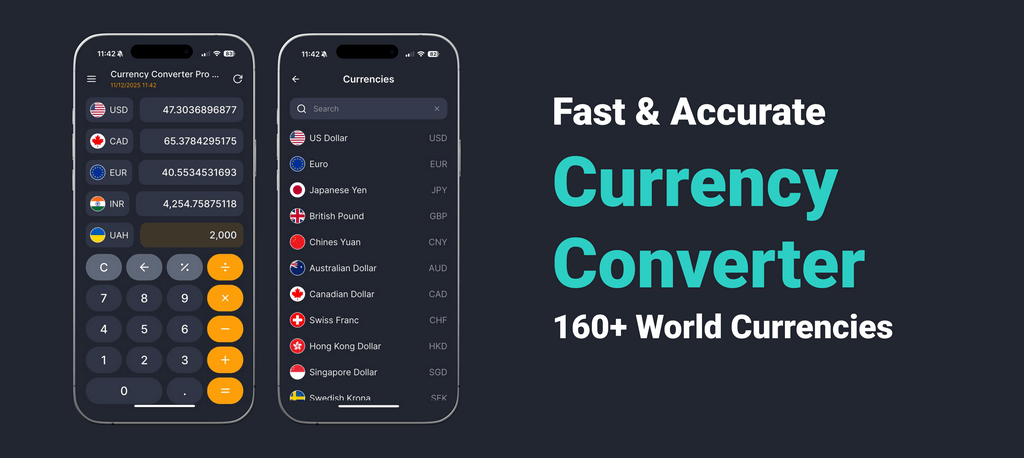


EUR to USD — Convert Euro to US Dollar
If you’re typing 200 eur to usd, you’re probably not “studying FX” — you’re trying to make a real decision: pay a US invoice, price a subscription in dollars, compare a transfer quote, or budget a trip where most prices are in USD. This page converts Euro (EUR, €) to US Dollar (USD, $) using a live reference benchmark so you can orient yourself quickly.
The important nuance: a live benchmark is a baseline. Your bank, card issuer, ATM, or transfer service can deliver a different EUR→USD result because of spread, fees, and timing. For a fast check right before you pay, open the currency app from the header and compare providers by the all‑in outcome, not just the advertised rate.
Quick conversion: how to read EUR→USD
EUR/USD is typically quoted as USD per 1 EUR (how many dollars one euro buys). In that quote format:
- EUR → USD: multiply (EUR × USD per 1 EUR).
- USD → EUR: divide (USD ÷ USD per 1 EUR).
Euro dollar exchange: the one‑second sanity check
When the quote is “USD per 1 EUR,” converting from EUR should usually produce a similar‑scale amount in dollars. If your result looks wildly off, you may be using the inverse quote or mixing directions (EUR→USD vs USD→EUR).
Why EUR/USD feels “tight” but still costs money
EUR/USD is one of the most traded FX pairs, so the market is liquid. But retail pricing is still retail: providers build their margin into the rate (spread) and may add explicit fees. That’s why two “no fee” offers can produce different USD totals for the same EUR amount.
Today rate (live benchmark) — what it represents
On this page, “today / live” means a reference benchmark you can use for comparison and budgeting. It’s not a guarantee of the executed rate you’ll get at a bank, card terminal, or transfer service. Your final EUR→USD can differ because:
- Spread: the provider’s margin embedded into the retail rate.
- Fees: fixed transfer fees, intermediary charges, ATM fees, and card foreign transaction fees.
- Timing: weekend/off‑hours buffers or cut‑off times can change pricing.
Fees & spread: why your EUR→USD result differs
When people compare “euro to dollar” quotes, they often focus on the headline rate. In real life, the most useful comparison is: How many USD do I actually get (or how many EUR do I actually pay) after everything?
Bank transfer vs card vs cash exchange (practical differences)
- Transfers/remittances: often have fixed fees + a spread; great for large amounts if pricing is fair.
- Card purchases: rate depends on the network + issuer; watch for foreign transaction fees.
- Cash exchange: can be convenient, but spreads may be wider (especially in tourist locations).
A good method is to pick a test amount (like 200 EUR), check the benchmark in the converter app, then compare providers by the final USD you receive or are charged.
Common amounts (example math only — not live rates)
Example only (not a live rate): assume 1 EUR = 1.10 USD (example benchmark).
| Amount (EUR) | Example rate | Approx. result (USD) |
|---|---|---|
| €10 | 1.10 USD per 1 EUR | $11.00 |
| €20 | 1.10 USD per 1 EUR | $22.00 |
| €100 | 1.10 USD per 1 EUR | $110.00 |
| €200 | 1.10 USD per 1 EUR | $220.00 |
| €500 | 1.10 USD per 1 EUR | $550.00 |
| €1,000 | 1.10 USD per 1 EUR | $1,100.00 |
“200 eur to usd” — the comparison trick that avoids bad deals
Use one consistent amount (like 200 EUR) across every provider you’re considering. Then compare the final USD result after fees. This makes hidden fixed fees obvious and helps you spot when a “better rate” is actually worse once fees are included.
DCC prompt: “Pay in EUR or USD?”
If you’re in the US and a terminal/ATM offers to charge you in EUR instead of USD, that’s usually Dynamic Currency Conversion (DCC). The merchant (or ATM operator) is offering to convert for you—often with an extra markup.
- Rule of thumb: choose USD (the local currency) and let your card network/issuer do the conversion.
If you want a quick baseline before you accept the prompt, check the live reference quote and then compare it to the DCC offer.
Weekends and off‑hours: why “same pair” can look different
Even for major pairs like EUR/USD, some providers widen buffers during weekends or off‑hours. If the amount is meaningful, compare again during regular hours and focus on the all‑in result rather than a single screen rate.
Related pages
If you also need the reverse direction, use the USD to EUR converter as a benchmark. For more USD context, see the US dollar (USD .
- US dollar (USD
- USD to EUR converter
- USD to GBP converter
- USD to COP converter
- USD to INR converter
- USD to ILS converter
FAQ — EUR to USD
What is 1 EUR in USD today?
Use the converter for a live reference benchmark. Your executed EUR→USD depends on provider spreads, fees, and timing.
How do I convert EUR to USD (multiply or divide)?
If the quote is USD per 1 EUR, convert EUR→USD by multiplying EUR × rate. Convert USD→EUR by dividing USD ÷ rate.
Why is my EUR→USD rate different from what I see online?
Many online quotes are benchmarks. Retail providers add spreads and/or fees, so the final USD you receive or are charged can differ.
Do banks, cards, ATMs, and cash exchange use different rates?
Yes. Each channel has different cost structures. Compare by the all‑in outcome: total EUR paid vs total USD received/charged after fees and spread.
Should I choose local currency or my home currency (DCC) in the US?
In most cases, choose USD (local currency) to avoid DCC markups. Use the app reference quote as a baseline if you want a quick comparison.
Do weekend or holiday rates differ?
They can. Some providers widen buffers during weekends/off‑hours. If it matters, compare again during regular hours and focus on the all‑in result.
Sources
- European Central Bank — Euro reference exchange rate methodology and context.
- Federal Reserve — Official background for USD and US financial conditions.
- BIS — FX market structure and benchmark vs retail pricing concepts.
- Visa — Card FX conversion basics and why charged amounts can differ.
- Mastercard — Factors that affect currency conversion on card transactions.
Educational only, not financial advice.
Last updated: January 21, 2026