

Getting Paid in a Foreign Currency: Fees, FX Rates, and Smart Invoice Tactics
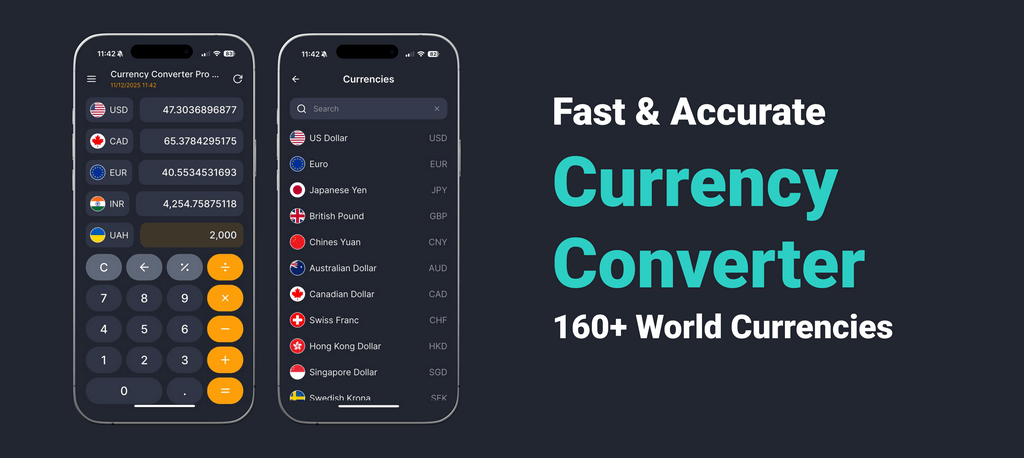
Getting paid in a foreign currency isn’t just “converting money.” It’s choosing who sets the price of FX: your bank, a card network, a platform, or you. That choice can quietly change your take-home amount more than any headline fee. This guide is for freelancers, agencies, and small businesses who want payouts that are predictable and fair. Use the real converter in the header for a quick reference check; if you track several payments across the month, it’s often faster to check in the app between calls or invoices.
The says-it-all question: who is doing the conversion?
Before you compare anything, answer this:
Am I being paid in Currency A and converting into Currency B — or is the client’s side converting before they pay?
That single sentence prevents most “why did I receive less?” surprises. Two payments can have the same invoice amount and still land differently depending on where conversion happens.
Reference rate vs what you actually receive
Your converter (and most financial sites) show a reference-style rate — useful for orientation, budgeting, and comparisons. Your actual payout can differ because providers add:
- a rate margin (spread)
- fixed fees
- timing buffers (cutoffs, weekends, settlement windows)
A clean comparison method (that always works)
Ignore marketing labels. Compare the delivered amount in your home currency using the same invoice amount, on the same day, with the same assumptions.
If you re-check often (waiting for funds to clear or planning invoice timing), use the header converter as a quick sense check and use the app for rapid re-checks on mobile.
Choosing invoice currency: control vs friction
There’s no universal best choice — only a best fit for your business.
Invoice in your home currency (you control revenue; the client controls FX)
Pros:
- You know exactly what you earn.
- Accounting is simpler.
Cons:
- The client might see a higher total after their bank/platform converts.
- Some procurement teams prefer paying in their local currency for budgeting.
Invoice in the client’s currency (easier approval; you accept FX risk)
Pros:
- Clients often prefer it.
- Can reduce friction at purchase approval time.
Cons:
- You accept FX variability between invoice and settlement.
- Your conversion path (bank/platform) has more influence on your net.
Rule of thumb: If predictability matters most, invoice in your currency. If winning the deal matters most, invoice in theirs — but be intentional about where conversion happens.
The “middle path” many pros use
Quote in the client’s currency (for clarity), but include one plain term such as: “Total reflects your local currency for convenience. FX conversion may apply based on your payment provider.”
This keeps expectations clean without turning your invoice into a finance document.
Payment rails: bank transfer vs card vs platform payout
Two invoices can produce different results purely because of the rail.
Bank transfers: audit-friendly, but sometimes pricey on FX
Bank rails can be stable and traceable. Pricing can hide in:
- conversion margin at your receiving bank
- incoming wire fees (sometimes)
- intermediary bank charges (in some corridors)
Timing also matters: cutoffs and bank holidays can shift settlement.
Card-funded payments: convenient, but fee stacking is common
If your client pays by card (or a platform charges their card), FX can involve issuer fees, platform fees, and sometimes an added conversion margin. Cards are fantastic for speed and convenience — but don’t assume “card = best FX.” Measure the delivered amount.
Platforms and balances: frictionless, but check the conversion point
Many platforms let clients pay in one currency and you withdraw in another. The key question is: where does the conversion happen?
- at client checkout
- inside the platform balance
- at withdrawal to your bank
Each stage can carry its own pricing.
Fees that look small — until you zoom out
Fixed fees punish small invoices
A flat $3–$10 fee is painful on a $100 invoice and almost irrelevant on a $5,000 invoice. If you invoice small amounts frequently, your strategy should prioritize minimizing fixed fees (or batching payouts).
“No fee” can still be expensive
A “no-fee” promise can hide a wider spread. Again: compare the delivered amount, not the label.
Timing buffers: weekends, off-hours, and delayed settlement
Some providers widen pricing when markets are thin. Others batch settlements. If you invoice on Friday and settle on Monday, your effective conditions can shift.
Common conversions (example math only — not live rates)
Example only (not a live rate): assume 1 EUR = 1.10 USD.
| Scenario | Amount | Example rate | Approx. home-currency result |
|---|---|---|---|
| Client pays €1,000, you want USD | 1,000 EUR | 1.10 USD per 1 EUR | 1,100 USD |
| Client pays €250, you want USD | 250 EUR | 1.10 USD per 1 EUR | 275 USD |
| Client pays €5,000, you want USD | 5,000 EUR | 1.10 USD per 1 EUR | 5,500 USD |
Now imagine two providers:
- Provider A: “no fee” but a ~2% worse rate
- Provider B: a $5 fee but a tighter rate
On bigger invoices, Provider B can win easily. On tiny invoices, the fee might dominate. That’s why you compare instead of guessing.
Practical tactics that improve payouts (without finance jargon)
1) Put the conversion decision where you have leverage
If your receiving bank is consistently expensive on FX, try shifting where conversion happens (platform checkout vs platform balance vs bank conversion). The goal isn’t ideology — it’s measurement and repeatability.
2) Use one consistent “test invoice amount”
Pick a test amount (example only: $500 or €1,000) and compare options using the same amount. This makes differences obvious and repeatable.
3) Document your “normal” so you notice anomalies
Keep a screenshot of a typical fee breakdown. Next time you get paid, you’ll spot a weird spike immediately — and you’ll know whether it’s a one-off or a pricing change.
4) Separate “closing the deal” from “optimizing payout”
Sometimes you invoice in the client’s currency to close quickly. That can be correct. Just don’t let that choice lock you into a permanently bad payout setup.
Direction traps (GBP and CAD) — how to avoid inverted quotes
When you’re paid in GBP or CAD, it’s easy to misread the direction — especially if your tool shows the inverse pair by default.
GBP ↔ USD: the quick check
Use either page depending on what you have in hand:
If a quote looks “too big” or “too small,” step back. You might be reading the inverse.
CAD ↔ USD: same logic
“Let us convert it for you” prompts (the DCC idea, without travel)
Even outside travel, you may see a “helpful” conversion prompt — someone offers to convert on your behalf, often at a worse effective rate.
Rule of thumb: prefer being charged in the original currency and letting your chosen conversion path handle FX — unless you have a measured reason not to. Consistency beats surprise.
Related pages
- If your client pays in euros, start with the EUR to USD converter to sanity-check the direction.
- For UK invoices, compare the USD to GBP converter and the reverse GBP to USD converter .
- For Canadian clients, the USD to CAD converter and CAD to USD converter help you avoid inverted quotes.
- For background and terminology, see the US dollar (USD) currency hub .
FAQ — getting paid in foreign currency
Should I invoice in my currency or the client’s currency?
Invoice in your currency for predictability; invoice in the client’s currency to reduce friction. If you invoice in theirs, be intentional about where conversion happens.
Why does my payout differ from the rate I see online?
Online tools show reference-style rates. Your provider may add a spread, fixed fees, and timing buffers.
How do I compare two platforms fairly?
Use the same invoice amount, compare the delivered amount in your home currency, and include both visible fees and the implied rate margin.
Are card payments always worse for FX?
Not always. Cards can be fast and convenient, but fees can stack. Measure the delivered amount rather than assuming.
What’s the easiest way to avoid inverted quote mistakes?
Do a magnitude sanity check and confirm direction. If it looks backward, you’re likely viewing the inverse.
Do weekends or holidays matter for payouts?
They can. Some providers widen pricing outside market hours or delay settlement due to cutoffs. If timing matters, avoid last-minute weekend settlement.
How can I make this easier month to month?
Use the header converter for quick checks, and use the app if you monitor several invoices or payouts across the month.
Sources
- BIS: payments and settlement facts — how payments and settlement work (useful context for timing and cutoffs)
- Federal Reserve: payment systems overview — overview of U.S. payment systems (rails and processing concepts)
- ECB: euro reference rates — reference rate context (why reference vs retail differs)
- Bank of England: rates database — official rate concepts
- Visa: exchange rate calculator info — network rate context for card-funded payments and FX conversion
Educational only, not financial advice.
Last updated: January 21, 2026
A simple payout worksheet you can run once and reuse
If you want a default setup that you stop thinking about, do this once:
1) Choose one test invoice amount you use often.
2) For each method you’re considering, record:
- total fees (platform + withdrawal + incoming fee)
- where conversion happens
- time-to-usable funds
The best choice is often the one that delivers slightly less on paper but is consistent and predictable. Predictability has value.
Two sentence templates that reduce client confusion
- If you invoice in the client’s currency: “Your payment provider may apply FX conversion and fees on your side.”
- If you invoice in your currency: “Paying in this currency avoids unexpected FX charges.”
These lines reduce disputes and keep your relationship professional.