

INR to USD — Convert Indian Rupee to US Dollar
If you’re searching indian rupees in dollars, you’re usually trying to translate a number into a decision: what a ₹‑priced budget becomes in USD, how much a US subscription will cost from India, or what a transfer will land as after fees.
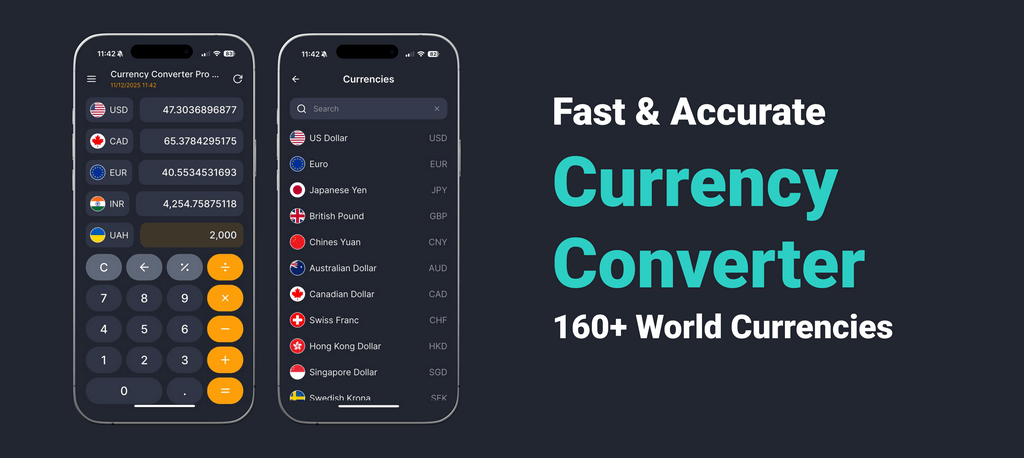
The converter on this page gives a live reference rate for Indian Rupee (INR, ₹) ↔ US Dollar (USD, $). Treat it as a benchmark that updates—not a guaranteed retail deal from your bank, card, or money transfer provider.
For the most up‑to‑date reference quote, check it in Currency Converter Pro Live from the header above. Then compare providers by the all‑in result once spreads and fees are included.
Live exchange rate: INR → USD today
INR→USD conversions can feel “backwards” at first because the number often gets smaller—that’s normal. Most quotes are expressed as either:
- USD per 1 INR (how many dollars you get for one rupee), or
- INR per 1 USD (how many rupees equal one dollar).
Quick rule:
- If you have INR per 1 USD, then INR → USD is divide (INR ÷ rate).
- If you have USD per 1 INR, then INR → USD is multiply (INR × rate).
“Today” rate vs the amount you actually get
“Today / now / live” should be read as a reference benchmark. Your executed INR→USD rate depends on the channel you use (bank transfer, remittance app, card settlement, ATM, cash exchange) and the provider’s pricing.
- Spread (margin) is often the biggest cost—even when a provider advertises “no fee.”
- Fees can be fixed, percentage‑based, or hidden in exchange pricing.
- Timing matters: weekends/off‑hours can widen retail spreads or add buffers.
How to convert INR to USD (in practice)
Step 1: Enter the amount in INR (salary, invoice, savings, travel budget).
Step 2: Select USD as the target currency and read the benchmark result.
Step 3: If you’re moving real money, estimate the “real result” by adding likely spread + fees for your method.
Fast “provider audit” for INR→USD
- Cards: check foreign transaction fees and whether your issuer converts at network rates.
- Transfers/remittance: compare total INR paid vs USD received (not just the headline rate).
- Cash exchange: convenience varies; spreads can be much wider at airports or tourist spots.
Want an instant benchmark before you compare options? Use the app from the top banner: check the current reference quote in seconds.
Common conversions (example math only — not live rates)
Example only (not a live rate): assume 1 USD = 80 INR (so 1 INR ≈ 0.0125 USD).
| Amount (INR) | Example rate | Approx. result (USD) |
|---|---|---|
| 1 INR | 80 INR per 1 USD | 0.0125 USD |
| 100 INR | 80 INR per 1 USD | 1.25 USD |
| 1,000 INR | 80 INR per 1 USD | 12.50 USD |
| 10,000 INR | 80 INR per 1 USD | 125.00 USD |
Lakh and crore: common INR amounts in USD (example only)
Many INR→USD queries use Indian numbering (lakh/crore). With the same example assumption above:
- 1 lakh INR (₹100,000) ≈ $1,250 (example only).
- 1 crore INR (₹10,000,000) ≈ $125,000 (example only).
For a live reference benchmark at the moment you need it, check the app in the header (#app-download).
Fees & spread: why your result differs by provider
- Spread: providers may quote a worse INR→USD rate than the benchmark and keep the difference.
- Transfer fees: remittance and bank wires can add service and intermediary charges.
- Card fees: foreign transaction fees can apply to USD charges from abroad.
- Weekend/off‑hours buffers: some providers widen pricing when markets are less liquid.
Bank transfer vs card settlement vs cash exchange
Think in “all‑in” terms:
- Transfers/remittance: best compared by total INR paid vs USD received.
- Cards: best compared by final INR charged for a USD amount after issuer/network conversion.
- Cash exchange: best compared by the effective rate after commission—ask for the total you receive.
DCC prompt: “Pay in INR or USD?”
If a merchant terminal or ATM asks whether to charge you in INR or USD, that’s often a Dynamic Currency Conversion (DCC) prompt. A simple rule of thumb is:
- Choose the local currency of the country you’re paying in (USD in the US) to avoid DCC markups.
DCC can replace your bank/card‑network conversion with a merchant/ATM rate that’s frequently less favorable.
Related pages
If you also need the opposite direction, use the USD to INR converter for a quick benchmark.
For broader context on the base currency side, see the US dollar (USD) currency hub .
Compare USD against other popular pairs:
FAQ — INR to USD
What is 1 INR in USD today?
Use the converter for the live reference benchmark. Your bank, card, transfer provider, or cash exchange may apply a different retail rate due to spread and fees.
How do I convert INR to USD (multiply or divide)?
If the quote is INR per 1 USD, you convert INR → USD by dividing INR ÷ rate. If it’s USD per 1 INR, you convert by multiplying INR × rate.
Why is my rate different from what I see online?
Most online quotes are benchmarks. Retail providers add cost via spread, plus possible transfer fees, ATM fees, and card foreign transaction fees.
Do banks, cards, ATMs, and cash exchange use different rates?
Yes. Each channel prices FX differently. Compare the all‑in outcome: total INR paid vs USD received, including spread and fees.
Should I choose local currency or my home currency (DCC) at checkout/ATM?
In most cases, choose the local currency (USD in the US) to avoid DCC markups. If you want the most up‑to‑date benchmark before you accept a prompt, check the current reference quote in the app from the header (#app-download).
Do weekend/holiday rates differ?
They can. Some providers widen spreads during weekends, holidays, or off‑hours. If timing matters, compare again during regular business hours and focus on the final all‑in result.
Sources
- Reserve Bank of India — Official context for INR and monetary policy communication.
- Federal Reserve — Official context for USD policy and financial conditions.
- BIS — FX market structure and benchmark vs retail pricing concepts.
- Visa — How card FX conversion works and why final amounts can differ.
- Mastercard — Currency conversion factors affecting charged amounts.
Educational only, not financial advice.
Last updated: January 21, 2026