

IDR to USD — Convert Indonesian Rupiah to US Dollar
Converting Indonesian Rupiah (IDR, Rp) into US Dollar (USD, $) can feel oddly confusing—mostly because the rupiah uses bigger nominal numbers. Before you pay, withdraw cash, or approve an online checkout, do these three quick checks: (1) confirm the direction (IDR→USD), (2) compare the all‑in result after fees/spread, and (3) avoid “helpful” conversion screens that quietly add markup.
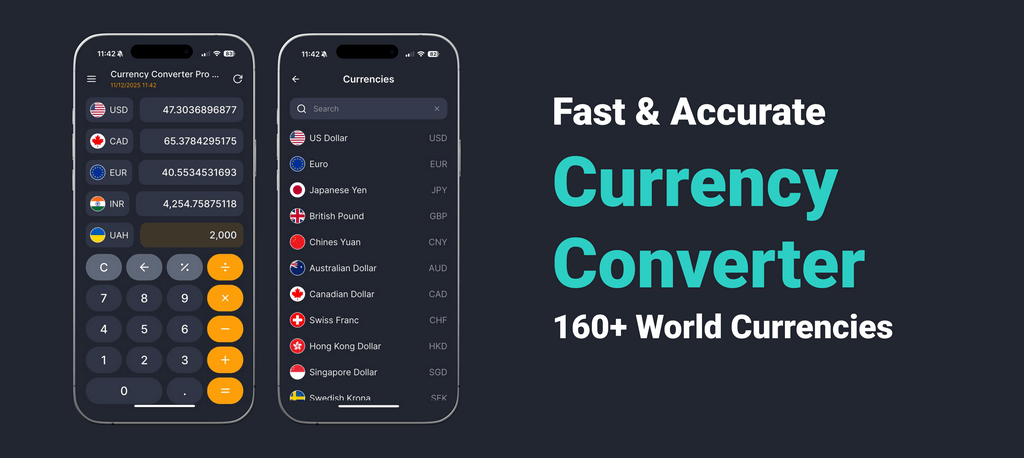
If you searched rupiah to american dollar, you’re usually trying to answer a simple question: “What does this Rp price mean in dollars?” The calculator on this page shows a live reference benchmark—great for orientation and planning. For the most up‑to‑date benchmark right before you pay, open the currency app from the header and re-check in seconds.
Live exchange rate: IDR → USD today
Most providers quote the rupiah as IDR per 1 USD (a larger number). That’s normal: the rupiah is denominated in smaller units, so everyday prices use more digits.
- If you see “IDR per 1 USD”: convert IDR → USD by dividing: IDR ÷ rate.
- If you see “USD per 1 IDR”: convert by multiplying: IDR × rate (the result will be small).
Rupiah To American Dollar: how to read the quote without getting trapped by zeros
A common mistake is to treat “150,000 IDR” like “$150,000” at a glance. Instead, train your brain to anchor on a few familiar Rp chunks (Rp50k, Rp100k, Rp1M). Once the scale is familiar, your conversions become quick and confident—especially when you sanity‑check in the mobile converter.
Rp symbol vs “IDR”: what you’ll see in Indonesia
Prices often show Rp (or “IDR”) and sometimes omit the currency code entirely. When you compare prices across apps (hotel, rideshare, marketplace), confirm you’re still looking at rupiah—not a hidden USD display mode.
How to convert IDR to USD (in practice)
Step 1: Enter your rupiah amount (IDR) and select USD as the output.
Step 2: Treat the result as a benchmark reference—useful for budgeting and comparisons.
Step 3: For a real transaction, compare providers by the final delivered USD (after fees + spread), not just by the advertised “rate.”
Hotels, rentals, and large holds: why the final USD can change later
In travel-heavy scenarios (hotels, scooter/car rentals), a Rp amount may be authorized first and later settled. Settlement timing and issuer fees can move the final USD slightly—even if the original Rp number is the same. Use the benchmark to understand the baseline, then judge by the statement total.
Common conversions (example math only — not live rates)
Example only (not a live rate): assume 1 USD = 15,000 IDR (example benchmark).
| Amount (IDR) | Example rate | Approx. result (USD) |
|---|---|---|
| Rp50,000 | 15,000 IDR per 1 USD (example) | $3.33 |
| Rp100,000 | 15,000 IDR per 1 USD (example) | $6.67 |
| Rp250,000 | 15,000 IDR per 1 USD (example) | $16.67 |
| Rp500,000 | 15,000 IDR per 1 USD (example) | $33.33 |
| Rp1,000,000 | 15,000 IDR per 1 USD (example) | $66.67 |
Which Rp amount should you test when comparing providers?
Pick one “typical” amount you actually spend (for example, a single withdrawal or a checkout total) and compare the all‑in USD outcome across options. Spreads and fixed fees don’t scale the same way—small purchases are fee‑sensitive, big purchases are spread‑sensitive.
Fees & spread: why your result differs
- Benchmark vs retail: the calculator shows a reference benchmark; providers add margin.
- Spread: the built‑in markup between “buy” and “sell” prices.
- Fixed fees: transfer fees, ATM fees, and intermediary bank fees can dominate small amounts.
- Timing buffers: some providers widen pricing on weekends/off‑hours.
ATM withdrawals in Indonesia: the “fee stack” to watch
Cash withdrawals can include multiple layers: an ATM operator fee, your bank’s fee, and a less favorable conversion spread. If the screen offers a conversion for “your convenience,” pause—this can be a DCC-style markup in disguise. When in doubt, check the benchmark in the currency app first, then choose the option that keeps the charge in local currency.
DCC prompt: “Pay in home currency or local currency?”
If a terminal or ATM offers to charge you in USD instead of IDR, that’s typically Dynamic Currency Conversion (DCC). DCC is often priced with extra markup on top of the standard card-network conversion path.
- Rule of thumb: choose IDR (local currency) and let your card network/issuer convert to USD.
The wording that should make you suspicious
Phrases like “guaranteed USD amount” or “lock in this rate” can be marketing language for added markup. If you want one simple habit: keep charges in IDR, then verify the baseline using your converter app.
Related pages
For broader USD context, see the US dollar (USD .
- US dollar (USD
- USD to INR converter
- USD to COP converter
- USD to GBP converter
- USD to ILS converter
- USD to NZD converter
FAQ — IDR to USD
Do I multiply or divide to convert IDR to USD?
If the quote is IDR per 1 USD, divide: IDR ÷ rate = USD. If the quote is USD per 1 IDR, multiply: IDR × rate = USD.
Why is my bank’s IDR→USD result different from the benchmark?
The benchmark is a reference point. Banks, cards, and transfer services can add spread, fixed fees, and apply conversion at settlement time, so the final USD can differ.
How much is 1,000,000 rupiah in US dollars?
Use the converter for a live reference benchmark. The exact USD depends on provider fees and spread, especially if you’re withdrawing cash or paying by card.
Should I pay in USD or IDR when the terminal asks?
Usually choose IDR. Paying in USD can trigger DCC markups. Keeping the charge in local currency typically avoids that extra layer.
Is cash or card better in Indonesia for conversion?
It depends on your amounts and fees. Cards can be convenient, while cash withdrawals may add ATM/operator fees. Compare the all‑in USD result for the same IDR amount before deciding.
What’s the fastest way to sanity-check rupiah prices while traveling?
Save a few anchor amounts (Rp50k, Rp100k, Rp1M) and verify with a live benchmark in the converter. For quick checks at checkout, open the app and compare the baseline to what your provider shows.
Sources
- Bank Indonesia — Official context for the rupiah and Indonesian financial system.
- Federal Reserve — Official USD policy context and consumer education.
- BIS — Explainers and statistics on FX markets and benchmark vs retail pricing.
- Visa — How card FX conversion works and why the charged amount can differ.
Educational only, not financial advice.
Last updated: January 21, 2026