

PKR to INR — Convert Pakistani Rupee to Indian Rupee
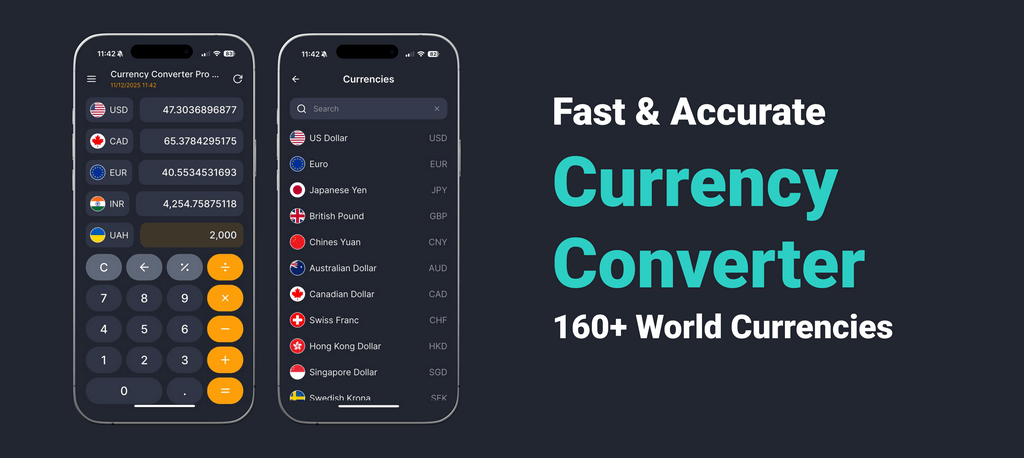
Sometimes the intent is obvious (“PKR to INR”), but people’s searches aren’t. You’ll see queries like pakistani rupee dollar even when the real goal is converting Pakistani Rupee (PKR, ₨) into Indian Rupee (INR, ₹) for budgeting a payment, checking a remittance, or translating a price across borders. This page gives you a clean benchmark: the converter shows a live reference quote for PKR → INR. You can also use the real demo converter in the site header for a quick check, and if you want the same tool on the go, open the mobile converter app from the header.
One important framing: “live” here means live benchmark data in the converter, not the exact retail rate you’ll receive. Banks and money transfer providers add spread and fees, and those costs often matter more than small FX moves.
Live exchange rate: PKR → INR today
“Live” means the converter updates a reference quote you can use as a baseline. The way PKR→INR is displayed depends on the source:
- INR per 1 PKR (common for conversion tools):
PKR × (INR per PKR) ≈ INR - Or the inverse, PKR per 1 INR:
INR × (PKR per INR) ≈ PKR
Sanity check: PKR and INR are both “rupee” currencies, so the numbers can look closer than USD pairs. Always confirm the direction label (PKR→INR vs INR→PKR) before trusting the result.
“Rupee to rupee” conversions: why mistakes happen more often
When both currencies share a similar naming pattern (“rupee”), the brain shortcuts. Two quick habits reduce errors:
1) Convert a small test amount (like 100 PKR) in the header converter.
2) Flip the direction once to confirm the reverse looks plausible.
How to convert PKR to INR (in practice)
Step 1 — Use the converter on this page (or the header demo converter) for a benchmark at the time you’re planning.
Step 2 — Identify which real-world channel applies:
- Money transfer / remittance (most common): provider fee + spread
- Bank conversion: often higher spreads, sometimes fixed fees
- Cash exchange: desk spread can be wide and tiered
- Card/online payment: less common for PKR→INR directly, but can appear when a merchant charges in INR
Step 3 — Compare outcomes the way providers price them:
- “How many INR do I receive for X PKR?”
- “What’s the total fee?” (fixed + %)
- “Is the fee included in the rate or added on top?”
The corridor reality: fees can dominate small PKR→INR conversions
For smaller amounts, a fixed transfer fee can be a bigger “cost driver” than the exchange rate itself. That’s why “best rate” comparisons can be misleading unless you compare delivered INR after fees for the same PKR amount.
Common conversions (example math only — not live rates)
Example only (not a live rate): assume 1 PKR = 0.30 INR (example benchmark).
| Amount (PKR) | Example rate | Approx. result (INR) |
|---|---|---|
| ₨100 | 0.30 INR per 1 PKR | ₹30 |
| ₨500 | 0.30 INR per 1 PKR | ₹150 |
| ₨1,000 | 0.30 INR per 1 PKR | ₹300 |
| ₨5,000 | 0.30 INR per 1 PKR | ₹1,500 |
| ₨10,000 | 0.30 INR per 1 PKR | ₹3,000 |
| ₨50,000 | 0.30 INR per 1 PKR | ₹15,000 |
A useful “reasonableness” check for PKR→INR
Because both currencies are rupees, people sometimes expect a 1:1-ish relationship. It’s safer to think in terms of: - “Does the INR result scale linearly?” (it should) - “Do fees meaningfully change small transfers?” (often yes)
If you’re doing repeated checks (shopping, budgeting, comparing transfer options), using the header converter is fast—but using the app makes it easier to switch directions and amounts without friction.
Fees & spread: why your result differs by provider
The converter’s benchmark is a reference. Providers charge for the service:
- Spread: margin between buy/sell rates
- Transfer fees: fixed and/or percentage fees
- Bank charges: intermediary fees, service fees, or conversion markups
- Timing: some providers widen spreads on weekends or off-hours
- Minimums: small transfers may face minimum fees
Hidden pricing pattern: “good rate, bigger fee”
Two providers can show similar rates while one quietly wins or loses on fees. The fair comparison method: - pick a test amount (say ₨10,000) - compute delivered INR after all fees - repeat once with a larger amount to see whether the provider scales better
Cross-rate routing: why PKR→INR may be priced “via USD”
Some systems don’t maintain a tight direct PKR/INR market quote for every retail use-case. Instead, they infer a rate using a cross-rate (often via USD) and then apply their margin. You don’t need to calculate this manually—just know that it can explain why two services differ even when each looks “reasonable” on its own.
DCC and card prompts: is it relevant for PKR↔INR?
Dynamic Currency Conversion (DCC) mostly appears when you’re paying by card and a terminal asks “pay in your home currency or local currency.” For PKR→INR, most people are transferring or exchanging cash rather than swiping a Pakistani card in India—but if you ever see a “pay in PKR vs pay in INR” prompt, the usual rule is: - choose the local currency (INR) and let the card network convert, to avoid merchant-set markups.
Related pages
- If you want a stable benchmark anchor for cross-rate comparisons, use the USD to INR converter.
- For USD basics and reference context, see the US dollar (USD) currency hub .
- If you compare pricing across other popular USD pairs, check USD to GBP , USD to ILS , USD to NZD , or USD to COP .
FAQ — PKR to INR
What is the PKR to INR rate today?
Use the converter at the top of this page (or the header demo converter) for a live reference quote. Treat it as a benchmark—providers can deliver a different rate after spread and fees.
Do I multiply or divide to convert PKR to INR?
If the quote is INR per 1 PKR, you multiply: PKR × (INR per PKR) ≈ INR. If you’re viewing PKR per 1 INR, you’re looking at the inverse.
Why do transfer apps show a different PKR→INR rate than the converter?
The converter shows a benchmark. Transfer providers apply their own spreads and fees, and the displayed “rate” can include fees implicitly.
Is it better to convert cash or use a transfer provider?
It depends on your amount and urgency. Cash exchange can have wide spreads (especially for small amounts), while transfer providers may have clearer delivered amounts but add service fees. Compare delivered INR after all fees for the same PKR amount.
Why do small PKR→INR conversions feel expensive?
Fixed fees and minimum charges can dominate small transfers. That’s why the “best rate” is less important than the net amount you receive.
Is “rupee” the same currency in Pakistan and India?
No. Pakistan uses PKR (₨) and India uses INR (₹). The names are similar, but they are different currencies with different market values.
Sources
- State Bank of Pakistan: official site — authoritative context for PKR and monetary/FX information.
- Reserve Bank of India: official site — authoritative context for INR and FX frameworks.
- BIS: FX statistics and market background — why benchmarks differ from retail pricing and how FX markets work.
- IMF: exchange rate concepts — explainer-level background on exchange rates and pricing.
Educational only, not financial advice.
Last updated: January 21, 2026