

Remittances & Money Transfers — FX Fees, Timing, and How to Avoid Bad Rates
Remittances are simple on the surface: you send dollars, someone receives local cash. The hard part is that FX pricing is rarely a single number. Between rate margins, fixed fees, cut‑off times, and “helpful” conversion options, two services can start from the same reference quote and still deliver meaningfully different payouts.
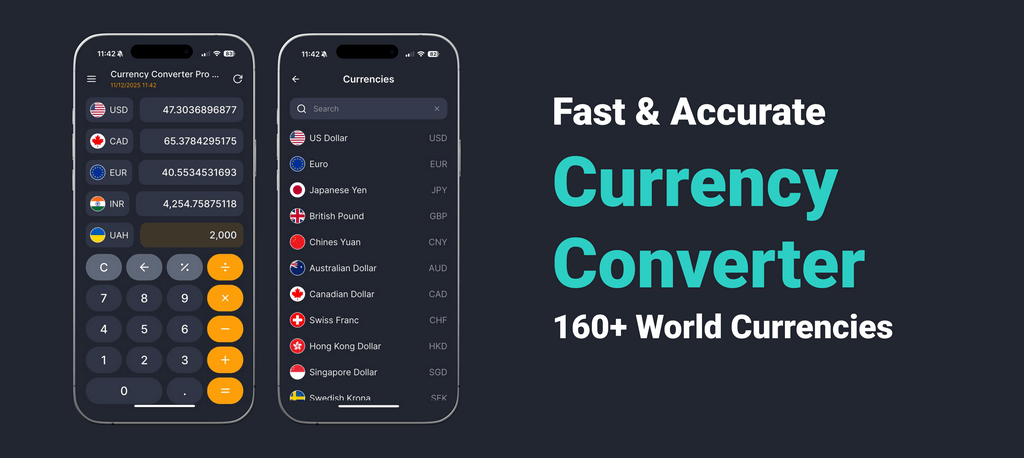
This guide is built for real decisions: choosing between bank transfer, a specialist remittance provider, a wallet top‑up, or cash pickup. Use the converter on this page for a fast reference check, then keep the app handy when you’re comparing providers or confirming the final amount right before you send.
If you’re sending to popular corridors, you can also open pair pages for practical context: USD to INR converter, USD to MXN converter, USD to PHP converter.
Start with the right mental model: reference rate vs. the rate you actually get
Most “FX rates” you see online are reference quotes: useful for orientation, budgeting, and comparisons. A provider’s delivered result is priced from that context, but typically includes one or more costs:
- Rate margin (spread) baked into the conversion
- Fixed fees (transfer fee, payout fee, local partner fee)
- Percentage fees (card processing, wallet funding, service charge)
- Timing effects (weekends, cutoffs, settlement delays)
The practical move: treat the on‑page converter as your neutral yardstick, then measure each provider’s quote against it using the same send amount.
The 4-step remittance check before you press “Send”
1) Confirm the direction and units
Providers mix formats: “1 USD = X” vs “1 local = Y USD”. A quick sanity check: when sending from USD to a weaker‑unit currency (like rupees or pesos), the local number typically looks larger. If the result looks suspiciously tiny, you may be reading the inverse direction.
2) Normalize fees: fixed vs percentage
A $3 fixed fee can be trivial on $500 and brutal on $20. A 2% fee is the opposite. Always compute the effective cost on the amount you actually plan to send.
3) Check the payout method, not just the headline rate
Bank deposit, cash pickup, mobile wallet, and card‑to‑card often have different local partners and fee stacks. Don’t compare “service A bank deposit” to “service B cash pickup” unless you actually need pickup.
4) Look at timing: cutoffs, weekends, and holidays
Some providers lock an FX quote only after identity checks, a funding step, or a bank transfer clears. If you start a transfer on a Friday evening, the “final” conversion may occur later. Use the app for a last‑minute reference check when the transfer is about to be executed.
Where the cost hides: three common pricing paths
Think of remittance pricing as three different paths that can stack together.
A) “Clean rate” + explicit fee
The provider shows a rate close to a reference quote, then charges a visible fee. This can be transparent and easy to compare—especially when the fee is flat and clearly stated.
B) “No fee” marketing + wider rate
The provider advertises “no transfer fee” but bakes costs into the conversion rate. This can still be a good deal, but only if you compare the delivered amount against a neutral quote.
C) Card-funded transfers: network conversion + issuer add-ons
If you fund a transfer with a card, the conversion and fees can involve the network and your card issuer. In practice, you may see a combination of a network FX rate, an issuer margin, and a “foreign transaction” fee.
Common transfers table (example math only — not live rates)
Example only (not a live rate): assume 1 USD = 50 “Local” (illustrative).
| Send (USD) | Example rate | Local before fees | Minus fixed fee | Local after fee |
|---|---|---|---|---|
| $20 | 50 Local per 1 USD | 1,000 | −$3 fee | 850 |
| $100 | 50 Local per 1 USD | 5,000 | −$3 fee | 4,850 |
| $500 | 50 Local per 1 USD | 25,000 | −$3 fee | 24,850 |
The takeaway: for small sends, fixed fees dominate. For larger sends, rate margin usually becomes the main cost.
Timing modules: why your “final amount” can drift
Settlement timing vs. authorization timing
Some payment flows separate authorization (a temporary hold) from settlement (what actually posts). If your provider funds via card or wallet rails, the FX step may occur at a different moment than you expect. That’s why “the converter said one thing” and “my receipt shows another” isn’t always a contradiction.
Cutoffs: the invisible deadline
Many providers have daily cut‑off times. If your transfer misses the window, it may batch to the next business day. Weekend and holiday schedules matter too—especially for bank-funded transfers.
Refunds and reversals
If a transfer fails or is reversed, the return FX can occur at a different time than the original. Keep confirmation emails and screenshots of the quote terms (rate lock, expiry, and fees).
Cash pickup vs. bank deposit vs. mobile wallet: picking the right rail
Bank deposit: usually best for larger amounts
Bank deposits tend to be cheaper when you can wait for settlement. They also leave an audit trail, which can matter for compliance and disputes.
Cash pickup: convenience with a price
Pickup is fast and accessible, but it can include additional local partner fees or wider pricing. If pickup is required, compare services on the same pickup method and location.
Mobile wallet: great UX, watch the stacking fees
Wallet payouts can be smooth, but the fee stack can include wallet funding fees, wallet cash-out fees, and local partner margins. Look at the net delivered amount, not just the speed.
When DCC shows up (and how to answer the prompt)
DCC (“Dynamic Currency Conversion”) is most common on travel card terminals and some online checkouts—not in the remittance transfer itself. But it matters when you’re paying a transfer fee, topping up a wallet, or paying a card charge related to the send.
- If a terminal offers “Pay in USD” vs “Pay in local currency”: choose the local currency of the transaction. That routes conversion through your card network/issuer rather than a merchant-set conversion path.
- If an online checkout offers a “helpful conversion”: treat it the same way—local currency usually keeps pricing more comparable.
When in doubt, do a quick sanity check with the converter above, then keep the app available for repeat checks across multiple providers.
Practical corridor notes (what changes by destination)
USD → INR: large numbers and bank cutoffs
India corridors often involve bank settlement timing and compliance steps. If you’re comparing quotes, open the USD to INR converter and use one consistent send amount across services.
USD → MXN and USD → PHP: cash pickup vs deposit differences
Mexico and the Philippines often have both cash pickup and bank deposit options. Compare like‑for‑like, and don’t assume pickup pricing matches deposit pricing. Useful pair pages: USD to MXN and USD to PHP.
USD → PKR and USD → BRL: small sends and fee sensitivity
On smaller transfers, fixed fees can dominate. If you send frequently, optimizing the fee structure can matter more than chasing tiny rate differences. Pair pages: USD to PKR and USD to BRL.
Related pages
- US dollar (USD) currency guide
- USD to INR converter
- USD to MXN converter
- USD to PHP converter
- USD to PKR converter
- USD to BRL converter
Sources
- https://www.imf.org/en/Topics/remittances — IMF: background on remittances and related policy context
- https://www.worldbank.org/en/topic/migrationremittancesdiasporaissues/brief/migration-remittances-data — World Bank: remittances overview and data context
- https://www.bis.org/about/factspayment.htm — BIS: how payment systems and cross‑border payments work (concepts)
- https://www.visa.co.uk/support/consumer/travel-support/exchange-rate-calculator.html — Visa: network FX rate reference tool (helps explain ‘rate vs fees’)
- https://www.mastercard.us/en-us/personal/get-support/convert-currency.html — Mastercard: currency conversion support and rate context
Educational only, not financial advice.
Last updated: January 21, 2026