

You can be careful, price‑sensitive, and still overpay on currency conversion — not because FX is “hard,” but because the checkout flow is designed to keep you moving. A terminal flashes two options, an ATM adds a polite “service,” a booking site offers a “guaranteed USD total,” and your brain chooses the path of least friction.
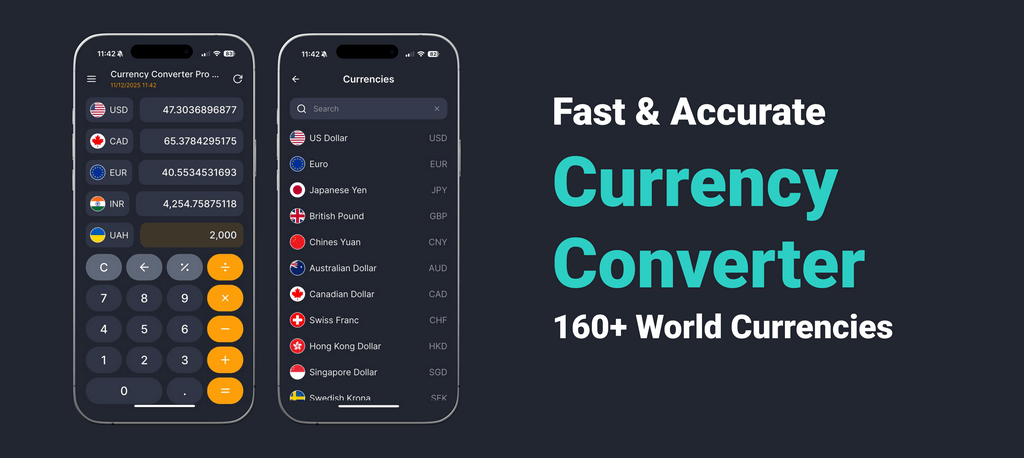
This playbook is built for real travel in 2026: cards vs ATMs vs cash, what Dynamic Currency Conversion (DCC) really means, where fees hide, and how to compare options in under 10 seconds without turning your trip into a finance class. Use the real converter on this page (and the demo converter in the header) to get a live reference rate. Then use the steps below to estimate the all‑in cost you’ll actually pay. For on‑the‑go decisions, you can keep the app handy and double‑check a screen before you tap.
Live exchange rate: USD → your travel currency today
“Live” here means the converter shows a reference quote that updates. It’s great for planning and for spotting “too‑good‑to‑be‑true” offers — but it’s not the final number your bank, card issuer, ATM operator, or exchange desk will apply after margins and fees.
Quote formats that cause 80% of traveler confusion
You’ll see two basic styles:
- Local per 1 USD: “How many pesos for one dollar?”
- USD per 1 local unit: “How many dollars for one peso?”
If you’re converting from USD, local‑per‑USD usually feels intuitive. If you’re converting back to USD, the inverse quote is often easier.
Sanity check: big‑number currencies (JPY, COP, MXN) will produce larger local totals when converting from USD. If your local total looks surprisingly small, you may have flipped the direction.
A better way to “trust” a number
Treat the converter like a compass: it points you toward the fair neighborhood. When a terminal or ATM offers to “convert for you,” compare that offer to your reference quote. If the offer looks inflated, choose local currency and move on.
If you want pair‑specific checks for common travel destinations, these pages are designed for quick baselines: - USD to JPY converter - USD to MXN converter - USD to COP converter - USD to PHP converter - USD to INR converter
The three money lanes (and what each one optimizes for)
Travel spending is usually one of three lanes:
1) Pay by card (good for safety, receipts, and speed)
2) Withdraw cash at an ATM (good for tips, markets, cash‑only transit, and backup)
3) Exchange cash at a desk (sometimes necessary, often worst value)
Each lane has a different cost structure — and a different “gotcha.”
Lane 1: card payments (where DCC loves to appear)
Card payments are usually the best default if you avoid DCC and you know whether your card charges a foreign transaction fee.
What to watch: - DCC prompt (more below): “Pay in USD or local currency?” - Foreign transaction fee: a percentage fee some issuers add - Authorization holds: hotels, car rentals, and some restaurants can hold more than the final total
Lane 2: ATMs (where fee stacking quietly kills budgets)
ATMs can be great — until you do three small withdrawals and pay the same fixed fee three times.
What to watch: - Operator fee (the ATM’s own fee) - Your bank’s fee (separate) - DCC at the ATM: a conversion option offered on the machine
Lane 3: exchange desks (where “convenience” is the product)
Exchange desks vary wildly. The same city can have both fair exchanges and tourist traps. Airports often price your fatigue.
What to watch: - Wide spreads and “0% commission” marketing - Service fees on top of rates - Bad timing: rushing leads to expensive choices
How to choose in 30 seconds (a traveler’s decision flow)
Here’s a practical flow you can use on the sidewalk outside a metro station.
Step 1 — decide what this transaction is
- Everyday spend (food, tickets, rides): default to card
- Cash‑only spend (markets, tips): ATM once in a sensible amount
- Deposit / hold situations (hotel, car rental): prefer card for documentation, but expect holds
Step 2 — pick one “anchor amount” for the trip
Choose a number you’ll spend repeatedly — a coffee, a metro day pass, a quick meal. Convert it once in the header demo converter. You’ll stop guessing, and you’ll spot inflated conversion offers instantly.
Step 3 — compare all‑in, not just “the rate”
Ask three questions: - Is a fee being added? - Is the conversion being done by the merchant/ATM (DCC) or by your issuer? - Am I repeating the same fixed fee multiple times (ATM stacking)?
If you want a fast second opinion in the moment, open the app and compare the screen total to your reference conversion.
Common conversions (example math only — not live rates)
Example only (not a live rate): assume 1 USD = 150 JPY, 17 MXN, 57 PHP, 83 INR (examples).
| Use case | Example amount | Example conversion | Approx. result |
|---|---|---|---|
| Quick meal (Japan) | $25 | 25 × 150 JPY/USD | ¥3,750 |
| Taxi + snacks (Mexico) | $40 | 40 × 17 MXN/USD | MX$680 |
| SIM + groceries (Philippines) | $30 | 30 × 57 PHP/USD | ₱1,710 |
| Day budget (India) | $60 | 60 × 83 INR/USD | ₹4,980 |
Why “big number” currencies make DCC feel tempting
When a receipt shows “₱3,200” or “¥18,500,” your brain wants instant USD translation. DCC sells that comfort. The safer move is to keep the comfort but control the price: check the reference conversion in the on‑page tool, then choose local currency at the terminal.
Fees & spread: why your result differs by provider
Two providers can both “convert USD to MXN” and still land at different totals because they price FX differently.
The three places the cost hides
1) Rate margin baked into conversion
2) Fixed fees (ATM operator fees, bank charges)
3) Percentage fees (foreign transaction fees, provider conversion fees)
Some services advertise “low fees” but widen the rate. Others show a clean reference‑like quote and add a visible fee. Either can be acceptable — as long as you compare the final total.
Settlement timing: why the posted amount can drift
Many card purchases have two stages:
- an authorization (temporary hold), then
- final settlement (what posts)
Hotels and rentals can pre‑authorize extra. Weekends can introduce timing differences. Refunds and tip adjustments can change a restaurant total after you leave. This is why “the converter said X” vs “my statement says Y” isn’t always a contradiction.
pre‑authorizations, deposits, and the “hotel shock”
Hotels and car rentals often place holds for security deposits. The hold can be meaningfully higher than the final charge, and the conversion may be calculated at the time of authorization, not settlement.
Practical tips: - Expect holds to be higher than the room rate - Keep receipts and confirmation emails - Use a card with enough available credit so holds don’t stress your trip
Why small ATM withdrawals cost the most
If an ATM charges a fixed fee, withdrawing $20 three times is often worse than withdrawing $60 once. Treat cash like a planned resource: withdraw once, track spending, top up only when needed.
DCC prompt: “Pay in home currency or local currency?”
DCC is the conversion offer you see at a terminal or ATM: “We can charge you in USD — do you want that?” It’s normal, and it can be expensive.
The practical default (works in most places)
- Choose local currency (let your card network + issuer convert).
- Treat “pay in USD” offers as a comparison moment — and usually decline.
How to spot DCC even when it isn’t labeled
Look for: - “Guaranteed exchange rate” - “Avoid bank fees” - “We can convert to USD for you” - “Conversion accepted?” without clear numbers
If the screen is vague, ask the cashier to switch it, or cancel and retry. One confident sentence saves money: “Local currency, please.”
When might paying in USD be reasonable?
Rarely — and only if the offer is transparent and close to your reference conversion. Don’t assume; compare.
If you’re the type who wants the reassurance without the guesswork, do a quick check with the header converter or use the app before you confirm the payment.
The modern travel reality: contactless, apps, and “invisible conversion”
FX isn’t only at cash machines. It’s in: - ride apps - ticket apps - hotel booking sites - airline upgrades - online shopping abroad - “helpful” checkout currency switches
“Pay in USD” online is DCC’s cousin
Online checkouts often offer “Pay in USD” as a convenience. It can embed a worse conversion than letting your issuer handle it. Your approach is the same: compare the reference conversion to the USD total being offered, and choose the option that’s closer to the fair neighborhood.
subscriptions and recurring charges abroad
If you buy a local SIM plan or a short subscription while traveling, your bank statement may show recurring charges in local currency. If you cancel, you may see reversals and re‑charges. Keep confirmation emails, and expect settlement timing effects.
A “Day 1” experiment that removes uncertainty
You don’t need to become an FX specialist. You need two small controlled tests.
Test A: one small card purchase
Buy something inexpensive by card. Keep the receipt. Later, compare the posted charge to your reference conversion.
Test B: one ATM withdrawal (one-time)
Withdraw a sensible amount once. Note whether the ATM tried to charge in USD (DCC) and whether it added a fee.
After two tests you’ll know: - whether your card adds a foreign transaction fee, - how your issuer converts in practice, - whether local ATMs are fee‑heavy, - how aggressively DCC is pushed where you are.
Scenario playbook: three moments where travelers overpay (and what to do instead)
Sometimes advice stays abstract until you picture the exact screen you’re looking at. Here are three common “overpay” moments, and the smallest move that fixes them.
Scenario 1 — restaurant terminal: the “helpful” USD button
You’re handed a terminal. It shows local currency, then a second screen appears offering USD. - What’s happening: DCC is being offered. The merchant (or their processor) proposes to convert for you. - Low-effort fix: choose local currency and confirm the currency line before tapping. - If you feel awkward: keep it simple: “Local currency, please.” It’s normal; staff hear it every day.
Scenario 2 — ATM: “Guaranteed exchange rate” + a fee you didn’t plan for
You withdraw cash and the ATM suggests it can “lock in” the exchange rate. It also shows a separate fee line. - What’s happening: The machine may be offering DCC, and the operator fee is separate from your bank’s fee. - Low-effort fix: withdraw in local currency, decline conversion to USD, and avoid repeating small withdrawals.
Scenario 3 — booking site: “Pay in USD to avoid surprises”
A booking site offers to charge you in USD. - What’s happening: Merchant-led conversion can be priced differently than issuer conversion. - Low-effort fix: compare the USD offer to a reference conversion of the local total. If the USD offer feels inflated, choose local currency.
Safety and “money friction”: how to carry cash without carrying stress
FX isn’t only a price problem; it’s a stress problem. When you feel unsafe, you pay for convenience. The goal is a setup that keeps you calm.
Build a two-layer cash plan
- Layer 1 (daily cash): enough for small vendors, tips, and transit for a day or two.
- Layer 2 (backup cash): a separate reserve, ideally stored separately or not carried daily.
This reduces the temptation to “panic exchange” at airports or tourist kiosks.
Keep receipts for two specific categories
- Hotels / rentals (holds): receipts help when deposits are released later.
- ATMs (operator fees): one receipt teaches you the local fee landscape quickly.
What about “no-fee” cards and travel money apps?
Marketing loves absolutes. Real life is mixed.
“No foreign transaction fee” is good — but not magic
A card can waive the explicit foreign transaction fee and still produce an all-in cost that differs from another card due to issuer pricing. That’s not scandal; it’s a reminder to measure once.
Multi-currency accounts can help — with one caution
Holding balances in multiple currencies can be convenient for frequent travelers. The caution is psychological: it can make you stop comparing. Even with multi-currency tools, the reference conversion on this page is useful for spotting outliers.
Micro-habits that save money without making travel feel like work
Here are small moves that add up:
- Read the currency line before you tap (contactless makes skipping this easy).
- Withdraw once, not often (fixed fees punish frequent withdrawals).
- Screenshot your “anchor amount” conversion for the day (one quick glance prevents DCC mistakes).
- Use the header converter before agreeing to “helpful” conversion — and for faster checks, use the app.
When you might intentionally pay for convenience
Sometimes you knowingly pay more — and that can be rational.
- Arriving late at night and you need a small cash buffer immediately
- A single urgent purchase where the merchant cannot switch currency
- A safety-driven decision (you want to leave quickly)
The point of this guide isn’t perfection; it’s awareness. Make the trade-off consciously.
A quick “language kit” for awkward moments
Small scripts reduce the social pressure that causes expensive choices.
- At a terminal: “Local currency, please.”
- At an ATM: “No conversion / continue in local currency.”
- At an exchange desk: “What’s the rate after all fees? What will I receive net?”
If you can say one sentence calmly, you save yourself the rushed “yes” that costs money.
Related pages
For quick baselines, guides, and pair‑specific conversions:
- US dollar (USD) currency hub
- USD to JPY converter
- USD to MXN converter
- USD to COP converter
- USD to PHP converter
- USD to INR converter
FAQ — travel money, cards, ATMs, and DCC
Should I pay in local currency or USD when abroad?
In most cases, choose local currency. Paying in USD can trigger DCC, where the merchant/ATM applies its own conversion and potential markup.
What is DCC in plain English?
It’s when a terminal or ATM offers to convert your purchase into USD at the point of sale. The USD amount is immediate, but the conversion may be worse than letting your issuer convert.
Why did my final charge differ from what I saw at checkout?
Authorization vs settlement, timing differences, refunds, tips, and issuer pricing can change what posts.
Is it cheaper to use ATMs or exchange desks?
It depends on fees and spreads. ATMs can be excellent when you avoid fee stacking; exchange desks vary widely and airports often price convenience aggressively.
How do I compare two options quickly at the terminal?
Convert the local total using the on‑page converter (reference), then compare it to the USD total the terminal offers via DCC. If the gap feels large, double‑check in the app and choose local currency.
What’s one mistake travelers repeat?
Accepting DCC “because it’s clearer” without comparing. The clarity is real; the markup can be quiet.
Does this advice apply to online shopping too?
Yes. Many checkouts offer “pay in USD.” Compare the USD offer to a reference conversion and choose the option with the fairer all‑in result.
Sources
- Visa — Dynamic Currency Conversion explained — Visa: what Dynamic Currency Conversion (DCC) is and how it appears at merchants/ATMs
- Mastercard — DCC Merchant Version Guide (PDF) — Mastercard: DCC disclosure/standards (merchant guide PDF)
- BIS — FX market statistics — BIS: FX market overview (context for how FX is priced and intermediated)
- CFPB — foreign transaction fees — CFPB: plain-language explanation of foreign transaction fees
- Federal Reserve — H.10 exchange rates — US Federal Reserve: exchange-rate reference data (H.10)
Educational only, not financial advice.
Last updated: January 21, 2026