

US Dollar (USD) — Currency, Exchange Rates & Conversions
If you searched us dollar, you likely want one of two things: a quick benchmark for a conversion, or a clearer understanding of why the “rate you see” isn’t always the rate you get. The US dollar—also called the United States dollar—uses the symbol $ and the ISO code USD. It’s the most common “reference currency” used in global pricing, trade, and finance, so USD exchange rates show up everywhere.
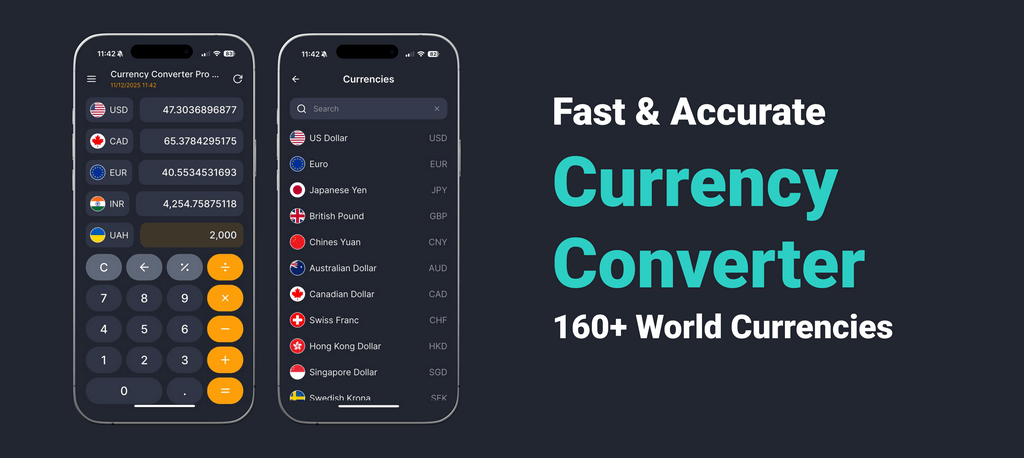
This USD hub pulls the pieces together: how USD exchange rates are quoted, what “live” means on our converter (a live reference benchmark), and the practical costs that change real outcomes—spread, provider fees, and card/ATM prompts like DCC. For the most up‑to‑date reference quote at the moment you need it, use Currency Converter Pro Live in the header above.
What is USD and where is it used?
USD is the official currency of the United States and is widely used in global trade and financial markets. Even when you’re not paying in dollars, prices for commodities and many international transactions are often referenced in USD, which is one reason USD pairs are among the most searched.
Why USD is treated as a “global reference”
In practice, many currency pairs are quoted or routed through USD because it’s highly liquid and widely traded. That can make benchmark quotes easier to compare—yet your retail conversion still depends on the provider you use.
Live exchange rates: benchmark vs the real rate you get
On this site, “live” means the converter shows a live reference rate—a benchmark that updates. It’s great for orientation, budgeting, and sanity checks. But banks, cards, ATMs, and money transfer services may apply a different price.
Mid‑market vs retail rate (the gap is the business model)
- Benchmark / mid‑market: a reference quote used for comparisons.
- Retail rate: what a provider offers after adding their margin and/or fees.
That difference is usually explained by the spread (margin baked into the rate) plus any explicit fees.
Do USD exchange rates change often?
Yes—benchmarks can move throughout the day as markets react to data, central‑bank communication, and risk sentiment. Retail providers may update less frequently or apply buffers, especially during weekends or off‑hours.
How to use the USD converter (fast and fee‑aware)
Step 1: Pick your currencies and enter an amount.
Step 2: Use the result as a benchmark reference.
Step 3: Before you pay or transfer, estimate your “real result” by checking:
- provider spread (often the biggest cost),
- fixed/percentage fees,
- timing (weekend/off‑hours buffers).
If you want the current benchmark instantly while you compare options, the app in the header (#app-download) is the quickest way to check the up‑to‑date reference quote.
Popular USD conversions
Jump to the most common USD pairs and reverse directions:
- USD to INR converter
- USD to MXN converter
- USD to JPY converter
- USD to CNY converter
- EUR to USD converter
More USD pair pages
- USD to COP converter
- GBP to USD converter
- USD to PHP converter
- MXN to USD converter
- COP to USD converter
- CAD to USD converter
- INR to USD converter
Common USD amounts (example math only — not live rates)
Example only (not a live rate): assume 1 USD = 1.50 units of a target currency (placeholder example). Use this table as a format guide—your calculator result will change with the current reference benchmark.
| Amount (USD) | Example rate | Approx. result |
|---|---|---|
| $1 | 1.50 per 1 USD | 1.50 |
| $10 | 1.50 per 1 USD | 15.00 |
| $100 | 1.50 per 1 USD | 150.00 |
| $1,000 | 1.50 per 1 USD | 1,500.00 |
Fees & spread: why your USD result differs by provider
- Spread: the invisible margin baked into a provider’s rate versus the benchmark.
- Fees: transfer fees, card foreign transaction fees, ATM operator fees, and intermediary charges.
- Weekends/off‑hours: wider retail spreads or added buffers are common.
A simple way to compare providers (works for any USD pair)
Instead of comparing only the headline rate, compare the all‑in outcome:
- For transfers: total paid (in your funding currency) vs USD delivered.
- For card purchases: final amount charged after network conversion + issuer fees.
- For cash exchange: how much you receive after commissions.
DCC prompt: “Pay in USD or local currency?”
If a card terminal or ATM asks whether to charge in USD or the local currency, that’s often a Dynamic Currency Conversion (DCC) prompt. A practical rule of thumb is:
- Choose the local currency to avoid DCC markups, and let your card network/issuer handle conversion.
If you want a quick benchmark before you accept a prompt, check the up‑to‑date reference quote in the app from the header (#app-download).
Related pages
- USD to INR converter
- USD to COP converter
- GBP to USD converter
- USD to MXN converter
- USD to PHP converter
- MXN to USD converter
- COP to USD converter
- CAD to USD converter
- INR to USD converter
- USD to JPY converter
- USD to CNY converter
- EUR to USD converter
FAQ — US dollar (USD)
What is USD and where is it used?
USD is the United States dollar, symbol $, ISO code USD. It’s the official currency of the US and is widely used as a global reference in trade and finance.
How often do USD exchange rates change?
Benchmark quotes can move throughout the day as markets react to new information. Retail providers may update differently and may add buffers on weekends or off‑hours.
Why is my bank/card rate different from Google’s rate?
Many quotes you see online are benchmarks. Banks and card issuers typically apply a spread (margin) and may add fees, so your executed rate can differ from the reference quote.
What is the mid‑market rate vs retail rate?
The mid‑market rate is a benchmark used for comparison. The retail rate is what a provider offers after adding spread and/or fees. Compare providers by the all‑in outcome, not only the headline quote.
What is Dynamic Currency Conversion (DCC) and should I avoid it?
DCC is when a merchant or ATM offers to convert the amount for you (often at a worse rate). In most cases, choosing the local currency helps you avoid DCC markups. For a quick benchmark, check the current reference quote in the app from the header (#app-download).
Do weekend/holiday rates differ?
They can. Some providers widen spreads or add buffers during weekends, holidays, or off‑hours. If the amount is important, compare again during regular business hours.
Sources
- Federal Reserve — Official information and context for USD and US monetary policy.
- U.S. Department of the Treasury — Background on the US financial system and dollar usage.
- BIS — FX market structure and benchmark concepts.
- Visa — Card FX conversion mechanics and why final amounts can differ.
- Mastercard — Currency conversion factors affecting charged amounts.
Educational only, not financial advice.
Last updated: January 21, 2026