

USD to BDT — Convert US Dollar to Bangladeshi Taka
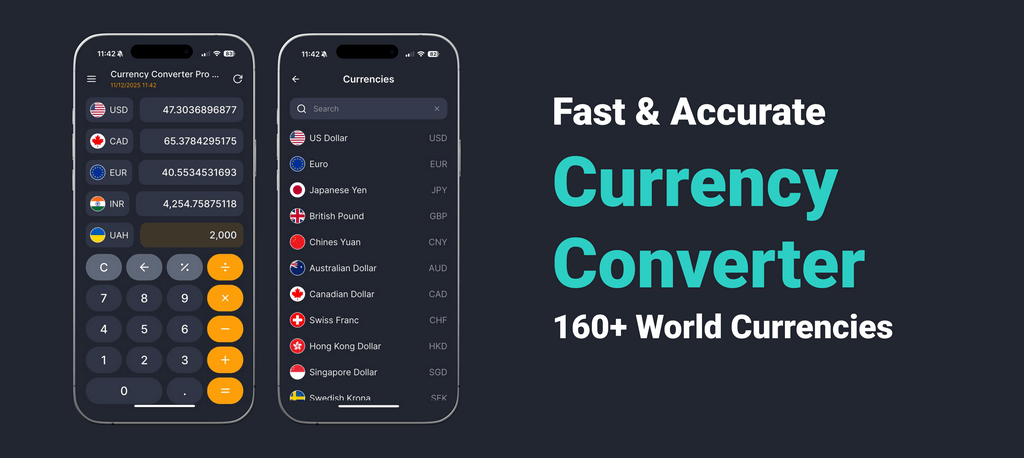
If you’re converting american dollar to bdt taka, you’re usually translating a real decision: a freelancer invoice priced in ৳, an e‑commerce total, family remittance math, or a “does this number even make sense?” check before you send money. This page helps you stay oriented. The converter provides a live reference quote for US Dollar (USD, $) → Bangladeshi Taka (BDT, ৳), and the demo converter in the site header lets you run the same quick check without scrolling. For repeat checks during the day, many people prefer to get the app so they can switch amounts and directions in seconds.
The key nuance: the reference quote is a baseline, not a promise. The amount you actually receive can shift because of provider margin (spread), service fees, and the channel you use (card, ATM, transfer, or cash).
Live exchange rate: USD → BDT today
“Live” means the converter updates a reference FX quote you can use as a starting point. USD→BDT is commonly quoted as BDT per 1 USD, so the fast rule is:
- USD × (BDT per USD) ≈ BDT
If you ever see the inverse (USD per 1 BDT), the math flips: - BDT × (USD per BDT) ≈ USD
Currency code + symbol: BDT (৳) vs “taka” wording
People often write “taka” without the code, but for clarity—especially in transfers—look for BDT or the ৳ symbol. It’s an easy way to avoid mix-ups when a provider lists multiple local currencies.
How to convert USD to BDT (in practice)
Step 1 — Check the on-page converter (or the header demo converter) to get a baseline at the time you’re planning.
Step 2 — Identify your real channel:
- Money transfer / remittance: service fee + spread inside the quote
- Bank conversion: sometimes higher spreads, sometimes fixed fees
- Card payment: card network conversion plus issuer pricing/markups
- ATM withdrawal: operator fee + your bank fees + FX pricing
- Cash exchange: desk spreads; may be tiered by amount
Step 3 — Compare options using one fixed test amount (for example $100) and focus on the only metric that matters:
“How many ৳ do I end up with after all fees?”
The remittance “small amount penalty”
For smaller transfers, a fixed fee can dominate the math. Two services may show similar-looking rates, but the net delivered BDT differs once minimum charges kick in. If you send money regularly, using the header converter as a fast baseline is fine—but installing the app is often quicker for repeated comparisons.
Common conversions (example math only — not live rates)
Example only (not a live rate): assume 1 USD = 110 BDT (example reference).
| Amount (USD) | Example rate | Approx. result (BDT) |
|---|---|---|
| $1 | 110 BDT per 1 USD | ৳110 |
| $10 | 110 BDT per 1 USD | ৳1,100 |
| $50 | 110 BDT per 1 USD | ৳5,500 |
| $100 | 110 BDT per 1 USD | ৳11,000 |
| $500 | 110 BDT per 1 USD | ৳55,000 |
| $1,000 | 110 BDT per 1 USD | ৳110,000 |
A practical “anchor amount” trick for large ৳ numbers
BDT totals can look huge compared to USD. Pick one anchor you’ll remember—say ৳10,000—convert it once, and then you can estimate everyday prices quickly. When it matters, re-check with the header converter or the app right before you pay.
Fees & spread: why your result differs by provider
The converter’s quote is a baseline. Providers charge for conversion and delivery, and that can show up in different ways:
- Spread (provider margin): baked into the rate you’re offered
- Transfer fees: fixed fee, percentage fee, or both
- Card issuer markups: foreign transaction fees or conversion margins
- ATM stacking: operator fee + your bank fee + FX pricing margin
- Timing buffers: some providers widen margins on weekends/off-hours
The “delivered amount” method (best for comparisons)
To compare two services fairly:
1) Pick one USD test amount.
2) Calculate the final delivered ৳ after fees.
3) Repeat once with a larger amount to see whether fees or spread dominate.
Why two providers can be “consistently off”
If one provider looks worse across multiple pairs (USD→BDT, USD→GBP, USD→INR), it’s often their pricing model (spread + fee structure), not a one-off quote. That’s why comparing delivered results beats chasing a single headline number.
DCC prompt: “Pay in home currency or local currency?”
If a card terminal or ATM ever asks whether to “pay in USD” or “pay in BDT,” that’s usually Dynamic Currency Conversion (DCC) or a similar operator conversion.
Rule of thumb: - Choose BDT (local currency) so the card network converts. - Choosing USD often means the merchant/operator sets the rate with extra margin.
Related pages
- For USD reference basics, see the US dollar (USD) currency hub.
- If you compare common USD baselines, check USD to INR , USD to COP , USD to GBP , USD to ILS , or USD to NZD .
FAQ — USD to BDT
What is the USD to BDT rate today?
Use the converter on this page (or the header demo converter) for a live reference quote you can use as a baseline. Your bank, card, ATM, or transfer provider may deliver a different result after fees and spread.
Do I multiply or divide to convert USD to Bangladeshi taka?
Most quotes show BDT per 1 USD, so you multiply: USD × (BDT per USD) ≈ ৳. If you’re viewing USD per 1 BDT, you’re looking at the inverse.
Why does a transfer app show a different USD→BDT result than the converter?
Transfer providers include their own margins and fees. Sometimes the fee is separated; sometimes it’s effectively embedded in the offered rate. Compare delivered ৳ after all charges.
Are small USD→BDT transfers less efficient?
Often, yes—fixed fees and minimums can dominate small amounts. If you’re sending small transfers repeatedly, compare total cost across a few typical amounts.
Should I choose USD or BDT when I’m asked at checkout or an ATM?
Choose BDT in most cases to avoid DCC markups. Paying in USD often means the merchant/operator sets the conversion rate.
What’s the simplest way to compare two providers?
Pick one USD test amount and compare the final delivered BDT after fees. Repeat once with a larger amount to see how pricing changes.
Sources
- Bangladesh Bank: official site — authoritative context for BDT and local monetary/FX information.
- Visa: Dynamic Currency Conversion explained — practical guidance on DCC prompts.
- Mastercard: Dynamic Currency Conversion guide (PDF) — how DCC works and where pricing is set.
- BIS: FX market statistics — background on FX markets and why retail results differ from reference quotes.
Educational only, not financial advice.
Last updated: January 21, 2026