

USD to EUR — Convert US Dollar to Euro
If you searched 1 usd in eur, there’s a good chance you’re staring at two different numbers and wondering which one is “real”: the price you saw in euros, the card authorization that hit your account, and the final settled amount a day later. USD→EUR conversions often show up in exactly that messy space—travel bookings, subscriptions priced in EUR, or invoices from EU vendors.
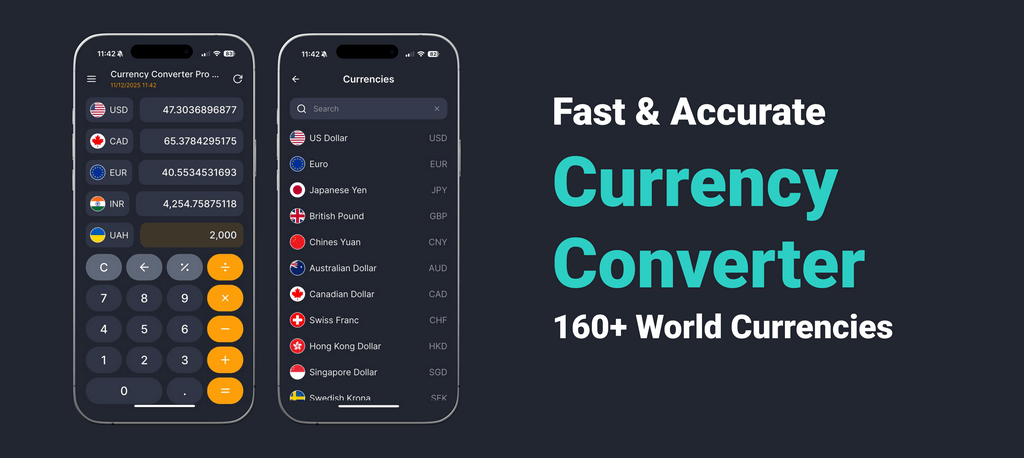
Use the real converter on this page (and the demo converter in the header) to pull a live reference quote for US Dollar (USD, $) → Euro (EUR, €). Then use the guide below to understand why the final EUR amount can differ depending on cards, ATMs, bank transfers, and “helpful” conversion prompts.
If you do this often, keeping the app installed makes it faster to re-check totals right before you confirm a payment.
Live exchange rate: USD → EUR today
“Live” means the calculator shows a reference quote that updates. It’s ideal for comparison and planning, but your bank or provider may apply spread and fees that change the final outcome.
Quote format: what you’re actually looking at
Most services display EUR per 1 USD. Converting is: - USD × (EUR per USD) ≈ EUR
If you see the inverse quote (USD per 1 EUR), then: - EUR × (USD per EUR) ≈ USD
Sanity check: USD→EUR usually produces a smaller number because you’re converting dollars into euros.
How to convert USD to EUR (in practice)
Step 1 — Run the amount through the converter (or the header demo converter) to set a baseline.
Step 2 — Identify the lane:
- Card payment: card network conversion + your issuer’s pricing (sometimes with a foreign transaction fee)
- ATM withdrawal: operator fees + your bank fees + FX pricing
- Bank transfer: fees + provider spread (often embedded)
- Cash exchange: desk spreads; sometimes tiered by amount
Step 3 — Compare outcomes using the same USD test amount (for example $100) and focus on the final EUR delivered.
Authorization vs settlement: why your card can “change its mind”
Card purchases can post as a temporary authorization first, then settle later at the final FX rate used by the network/issuer. That’s why you might see a slightly different EUR outcome once it finalizes—even when the reference quote looks stable.
Common conversions (example math only — not live rates)
Example only (not a live rate): assume 1 USD = 0.92 EUR (example reference).
| Amount (USD) | Example rate | Approx. result (EUR) |
|---|---|---|
| $1 | 0.92 EUR per 1 USD | €0.92 |
| $10 | 0.92 EUR per 1 USD | €9.20 |
| $50 | 0.92 EUR per 1 USD | €46 |
| $100 | 0.92 EUR per 1 USD | €92 |
| $500 | 0.92 EUR per 1 USD | €460 |
| $1,000 | 0.92 EUR per 1 USD | €920 |
A simple “double-check” for travel budgets
If you’re building a trip budget, convert one “anchor” category (e.g., hotel total) and one “daily” category (e.g., meals). It helps you estimate quickly in your head—and then refine with the converter for accuracy.
Fees & spread: why your result differs by provider
Even when the reference quote is clear, providers can change the delivered amount through:
- Spread: provider margin built into the conversion
- Foreign transaction fees: some cards add a fee on top of the conversion
- ATM stack: operator fee + bank fee + FX pricing
- Transfer fees: fixed fees can dominate smaller transfers
- Off-hours buffers: some services widen pricing during weekends or low-liquidity windows
The “fee hides in the rate” pattern
Many services don’t show a separate fee line item; they embed margin in the rate. The only fair comparison is: for the same USD amount, how many euros do you actually receive?
SEPA vs card vs cash: different frictions
If you’re paying an EU vendor, the cheapest path can differ depending on whether you’re using card, bank transfer, or cash. Use the same test amount and compare the delivered EUR after everything.
DCC prompt: “Pay in home currency or local currency?”
A classic EU checkout moment: “Pay in USD instead of EUR?”
Some terminals and online checkouts offer to “convert” the total into USD for you. It can feel safer—but it often creates a separate conversion path controlled by the merchant/terminal.
A practical default:
- pay in EUR when possible, then let your card network and issuer handle conversion;
- treat “we’ll convert for you” options as a reason to double-check the all‑in cost.
If you want a quick reality check, run the EUR total through the on-page converter first—and for frequent payments, use the app for fast spot-checks.
Red flags that usually signal an extra conversion layer
Look for wording like “guaranteed rate”, “convenience conversion”, or “I accept conversion.” Those are signals to pause and compare.
Related pages
- USD background and context: the US dollar (USD) currency hub.
- Reverse direction: EUR to USD .
- Other popular USD pairs:
FAQ — USD to EUR
What is the USD to EUR rate today?
Use the converter on this page (or the header demo converter) to see a live reference quote. Your bank or provider may deliver a different result after spread and fees.
Do I multiply or divide to convert USD to EUR?
Most quotes show EUR per 1 USD, so you multiply: USD × (EUR per USD) ≈ EUR. If you have USD per 1 EUR, that’s the inverse quote.
Why does my card authorization differ from the final settled amount?
Authorizations can be provisional. The final settlement may use the network/issuer conversion applied at settlement time, plus any issuer margin or foreign transaction fee.
Is it better to pay in EUR or USD at checkout?
When given the choice, paying in EUR usually keeps conversion with your card network and issuer. Choosing “pay in USD now” can trigger a merchant/terminal conversion that may be harder to compare.
Are ATMs a good way to get euros?
They can be convenient, but fees may stack (operator + bank) and can be expensive on small withdrawals. Compare all-in cost for a fixed USD amount.
How can I compare two services fairly?
Pick one test amount (like $100) and compare the final EUR delivered after fees—then test a larger amount to see whether fixed fees or spread dominates.
Sources
- European Central Bank (ECB): official site — EUR and euro-area monetary context.
- Federal Reserve: official site — USD reference materials.
- Visa: Dynamic Currency Conversion explained — DCC guidance and decision points.
- BIS: FX market statistics — FX market background and pricing.
Educational only, not financial advice.
Last updated: January 21, 2026