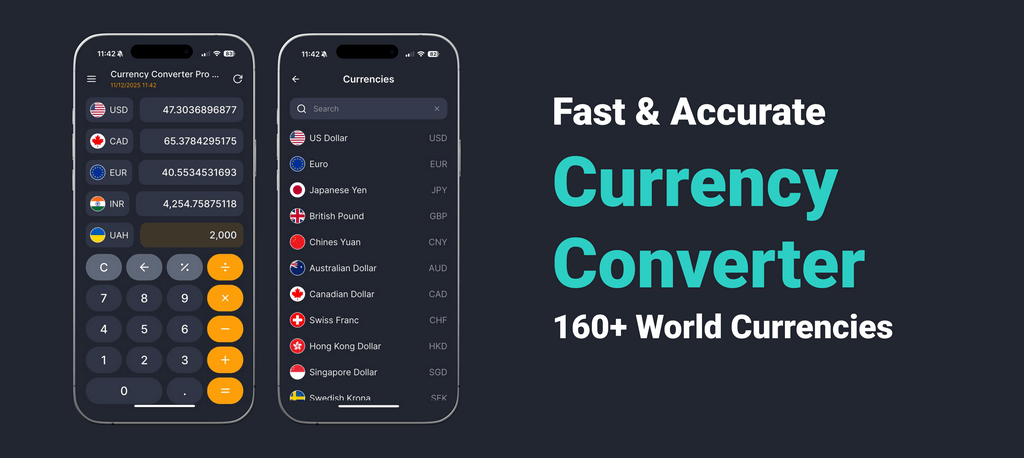


USD to INR — Convert US Dollar to Indian Rupee
If you’re searching america dollar in indian rupees, you usually need a number you can act on: planning a trip to India, paying an INR-priced invoice, or estimating what a transfer will deliver after fees. The calculator on this page converts US Dollar (USD, $) ↔ Indian Rupee (INR, ₹) using a live reference rate—a benchmark that updates.
One reality check before you rely on the result: the “rate you see” is not always the “rate you get.” Banks, card issuers, ATMs, and money changers typically add a spread (their margin) and may charge extra fees. Use the converter for orientation, then compare the all-in outcome for your chosen method.
Live exchange rate: USD → INR today
USD/INR is most often quoted as Indian rupees per 1 US dollar. In plain terms, it tells you how many ₹ you get for $1 at the benchmark reference point.
A quick sanity check:
- Converting USD → INR usually produces a larger number (rupees are smaller units than dollars).
- Converting INR → USD usually produces a smaller number.
“Today” vs executed rate (what actually happens)
On a converter page, “today / now / live” should be read as reference benchmark. Your executed rate depends on:
- the provider’s retail pricing (spread),
- the payment channel (transfer vs card vs cash),
- timing (weekends/off-hours can widen retail spreads).
If you’re making a decision (purchase, invoice, transfer), compare options by the final INR received (or total USD paid), not the headline quote alone.
How to convert USD to INR in practice
- Enter the amount in USD (e.g., budget, invoice value, or transfer amount).
- Choose INR as the target currency and review the conversion result in ₹.
- Recommended: if you’ll use a bank/card/ATM, estimate your “real result” by factoring in spread, any fixed/percentage fees, and possible weekend/off-hours buffers.
Multiply or divide? The one-line rule
If the quote format is INR per 1 USD (the common format), then:
- USD → INR: multiply
USD × rate - INR → USD: divide
INR ÷ rate
Common conversions (example math only — not live rates)
Example only (not a live rate): assume 1 USD = 80 INR.
| Amount | Example rate | Approx. result |
|---|---|---|
| 1 USD | 80 INR per 1 USD | 80 INR |
| 10 USD | 80 INR per 1 USD | 800 INR |
| 100 USD | 80 INR per 1 USD | 8,000 INR |
| 1,000 USD | 80 INR per 1 USD | 80,000 INR |
Use this table as a format guide only—your calculator result will change with the current reference benchmark.
Fees & spread: why your result differs by provider
- Spread: the “invisible fee.” Even when a provider says “no fee,” cost can be embedded in a worse USD→INR rate than the benchmark.
- Fees: transfers may add service fees; cards may add foreign transaction fees; ATMs can add operator fees plus your bank’s fees.
- Weekends/off-hours: retail pricing can be less favorable when liquidity is lower or providers add conservative buffers.
- Cross-rate routing (only when relevant): USD→INR is typically direct, but when converting from a third currency your provider may route via a major currency, adding extra spread.
Bank transfer vs card vs cash: how to think about USD→INR
There’s no universal winner, but the clean comparison is always “all-in”:
- Cards: convenient; outcome depends on issuer fees and whether you avoid DCC (next section).
- ATMs: useful for cash needs; watch operator fees + your bank fees + DCC prompts.
- Transfers/remittance: often competitive for larger amounts; focus on total USD paid vs INR delivered.
Paying an INR invoice from the US: what to verify first
Before you pay an INR-priced invoice, confirm:
- whether the recipient receives INR locally or an intermediate conversion occurs,
- whether intermediary banks can deduct fees,
- the exact “you pay / they receive” breakdown (all-in, not just a headline rate).
DCC prompt: “Pay in home currency or local currency?”
If an ATM or card terminal asks “Charge in USD or INR?”, the safest rule of thumb is usually:
Choose INR (local currency) — this typically avoids Dynamic Currency Conversion (DCC), where the merchant/ATM sets its own conversion rate (often less favorable than your bank or card-network conversion).
Two quick tips:
- If you see “guaranteed rate” messaging, pause and look for the option to continue in INR.
- DCC can still be costly even if your card has a foreign transaction fee—because DCC markup and issuer fees can stack.
Related pages
If you also need the reverse direction, use the INR to USD converter for a quick benchmark.
For broader context on the base currency, see the US dollar (USD) currency hub (what moves USD and how FX quotes work).
You can also compare USD against other popular pairs:
FAQ — USD to INR
What is 1 USD in INR today?
Use the calculator for the live reference benchmark. Your bank, card, ATM, or money changer can apply a different retail rate due to spread and fees.
How do I convert USD to INR — multiply or divide?
If USD/INR is quoted as INR per 1 USD (common format), you multiply USD × rate to get INR. To convert INR back to USD, you divide INR ÷ rate.
Why is my rate different from what I see online?
Most online quotes are benchmarks. Retail providers add cost via spread, plus potential transfer fees, ATM fees, and card foreign transaction fees.
Do banks, cards, ATMs, and cash exchange use different rates?
Yes. Each channel has its own pricing and fee structure. The best comparison is the all-in result: total USD paid vs INR received.
Should I choose local currency or my home currency (DCC) at checkout/ATM?
In most cases, choose local currency (INR) to avoid DCC markup. DCC can replace your bank/network conversion with a merchant/ATM rate that’s often worse.
Do weekend/holiday rates differ?
They can. Providers may widen spreads during weekends, holidays, or off-hours. If timing matters, compare again during regular business hours and focus on the final all-in result.
What’s the simplest way to compare two providers for USD→INR?
Convert the same USD amount with both, then compare INR you receive after all fees. The option that yields more INR for the same USD is typically better value.
Sources
- Reserve Bank of India (RBI) — Official institution for INR context and policy communication.
- Bank for International Settlements (BIS) — FX market structure and trusted reference materials.
- Visa — How card FX conversion works and why card results may differ.
- Mastercard — Currency conversion behavior and factors affecting final amounts.
Educational only, not financial advice.
Last updated: January 21, 2026