

USD to KRW — Convert US Dollar to South Korean Won
Converting US Dollar (USD, $) to South Korean Won (KRW, ₩) is one of those money moments where your brain can misfire: you see a price tag in Seoul, a hotel deposit, or an online invoice in won, and the number “looks huge.” The calculator above gives a real-time reference quote for USD→KRW so you can orient fast. Then, if you’re actually paying, wiring money, or pulling cash, you can sanity-check the final result by thinking about spreads, card markups, ATM fees, and timing.
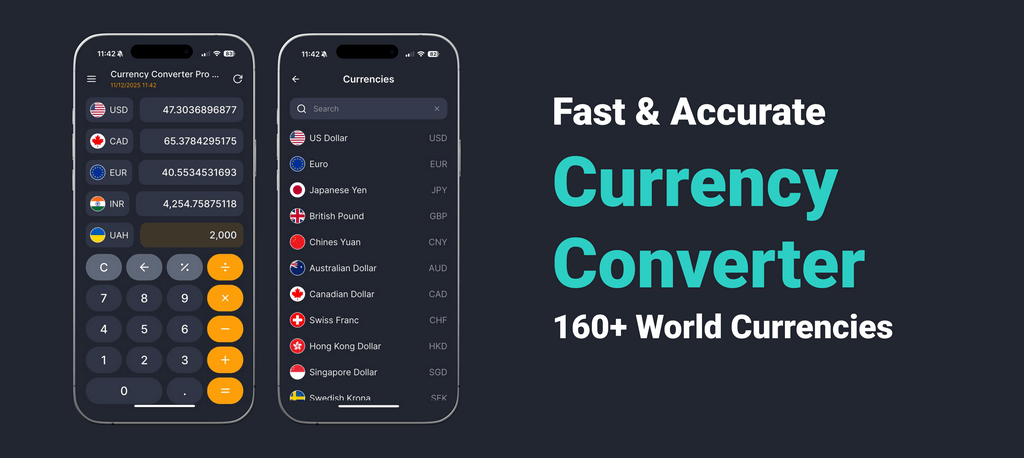
If you searched us dollar to won, this page is built to answer the practical question: “What does this USD amount really become in KRW (or vice‑versa)?” For the freshest benchmark, use the on-page converter—and if you want the same tool in your pocket, open the currency app from the header.
Live exchange rate: USD → KRW today
“Live” here means a live reference rate in the converter, not a promise of the exact rate you’ll get from a bank or card. For USD→KRW, quotes are usually shown as:
- KRW per 1 USD (most common).
If the quote reads “₩X per $1,” then USD × X ≈ KRW. - The inverse view (less common in everyday use).
If you see “USD per 1 KRW,” then KRW × (USD per KRW) ≈ USD.
Fast sanity check: with KRW-per-USD quoting, converting from USD should produce a bigger number. If your result gets smaller, you’re probably looking at the inverse direction.
US dollar to won: the 10‑second “direction check”
Before you trust any number, confirm two things:
1) You’re converting USD → KRW (not KRW → USD).
2) The quote is won per $1, not dollars per ₩1.
That tiny swap is the #1 reason people think they got “a crazy rate.”
How to convert USD to KRW (in practice)
Step 1 — Use the converter above to get a reference quote at the moment you’re budgeting.
Step 2 — Decide which “real world lane” you’re in:
- Card purchase (Visa/Mastercard + your bank)
- ATM withdrawal (network rate + bank/ATM fees)
- Bank transfer / remittance (provider spread + service fees)
- Cash exchange (wide spreads, sometimes better for larger amounts)
Step 3 — Do a quick fee/spread adjustment: - If you’re comparing providers, test the same USD amount everywhere (e.g., $100) and compare the KRW you receive after fees.
When USD→KRW differs the most
- Weekends/off-hours: some providers widen spreads when FX markets are less liquid.
- Small amounts: fixed fees dominate.
- Tourist-heavy merchants/ATMs: higher chance you’ll be offered DCC (see below).
Common conversions (example math only — not live rates)
Example only (not a live rate): assume 1 USD = 1,300 KRW (example benchmark).
| Amount (USD) | Example rate | Approx. result (KRW) |
|---|---|---|
| $1 | 1,300 KRW per 1 USD | ₩1,300 |
| $10 | 1,300 KRW per 1 USD | ₩13,000 |
| $50 | 1,300 KRW per 1 USD | ₩65,000 |
| $100 | 1,300 KRW per 1 USD | ₩130,000 |
| $500 | 1,300 KRW per 1 USD | ₩650,000 |
| $1,000 | 1,300 KRW per 1 USD | ₩1,300,000 |
Why KRW amounts look “large” (and why that’s normal)
The won has a different unit scale than the dollar. Everyday prices are often written in thousands of won, so your mental model should shift from “$12” to “₩12,000-ish” style thinking. A simple habit: when you see a KRW price, convert it once with the on-page converter, then keep a rough feel for what a “₩10,000‑ish” amount means for your trip or budget.
Fees & spread: why your result differs by provider
A “perfect” benchmark rate is mostly a reference point. What you get depends on the provider’s pricing:
- Spread: the built-in margin between buy/sell rates.
- Card issuer markups: some banks add an FX markup on top of the network rate.
- ATM operator fees: local ATM fees + your bank’s withdrawal/FX fees.
- Transfers/remittances: service fees (fixed or %) plus a spread.
A fair comparison trick (works for KRW)
When comparing two services, don’t compare “their rates” in isolation. Compare delivered KRW for the same USD test amount, after all fees. The “best looking rate” often loses once fixed fees and hidden spreads are included.
DCC prompt: “Pay in home currency or local currency?”
If a terminal or ATM asks whether to pay in USD or KRW, that’s usually Dynamic Currency Conversion (DCC). Rule of thumb:
- Choose KRW (local currency) whenever you can.
Paying in USD often means the merchant/ATM operator sets the rate and adds extra margin. - The exception: only consider USD if you can clearly see the total cost and it’s better—rare in practice.
If you travel often, this single choice can matter more than small day‑to‑day FX fluctuations. When in doubt, pay in KRW and let your card network handle conversion.
Related pages
- If you need the reverse direction, use the KRW to USD converter.
- For a broader reference about the base currency, see the US dollar (USD) currency hub .
- If you’re comparing travel budgets across regions, you might also check USD to GBP or USD to ILS .
FAQ — USD to KRW
What is 1 USD in KRW today?
Use the converter at the top of this page for a live reference quote. Treat it as a benchmark; your bank/card/ATM can deliver a different result after spread and fees.
Do I multiply or divide to convert USD to KRW?
Most quotes are KRW per 1 USD, so you multiply: USD × (KRW per USD) ≈ KRW. If you’re seeing USD per 1 KRW, then you’d divide or multiply by the inverse—check the direction label.
Why is my bank’s USD→KRW rate different from what I see online?
Online quotes are often mid-market/reference rates. Banks and providers add spreads, and card/ATM usage can add issuer fees, operator fees, or weekend markups.
Do cards, ATMs, and cash exchange use different USD→KRW pricing?
Yes. Cards typically follow network + issuer pricing, ATMs can add operator fees, and cash exchanges can have the widest spreads—especially in tourist areas.
Should I pick USD or KRW at an ATM/checkout screen?
Pick KRW in most cases to avoid DCC. Choosing USD often bakes in a worse exchange rate and additional margin.
Do weekend rates matter for USD→KRW?
They can. Some providers widen spreads when markets are less liquid. If you’re moving a larger amount, compare quotes during normal business hours and test with the same amount.
Is “₩” the same as KRW?
Yes. ₩ is the won symbol, and KRW is the ISO currency code used by banks and financial apps.
Sources
- Bank of Korea: Foreign Exchange System (reference rates context) — explains how KRW reference rates are used and why they’re benchmarks.
- Visa: Dynamic Currency Conversion explained — practical overview of DCC and the “pay in local currency” choice.
- Mastercard: Dynamic Currency Conversion compliance guide (PDF) — details how DCC works and where the rate is set.
- BIS: FX turnover statistics (market context) — background on FX market structure and scale.
Educational only, not financial advice.
Last updated: January 21, 2026