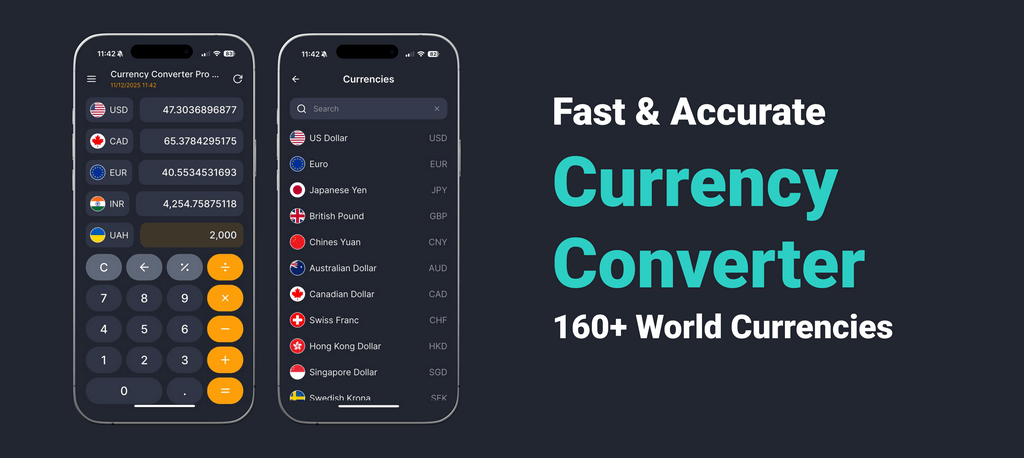


EUR to PLN Converter (Kurs euro złoty)
If you’re checking the eur pln exchange rate, you’re usually not doing it “just because”. You want a clear answer for everyday use: how many Polish złoty you’ll get for euros when you travel, shop, send money, or receive income from the eurozone. EUR ↔ PLN is one of the most searched currency pairs in Europe, and even a small difference in rate becomes noticeable when you convert larger amounts.
As of January 21, 2026, the official NBP average reference is 1 EUR = 4.2271 PLN.
This is a great benchmark for “euro into PLN” calculations, but your final result can be slightly different depending on where you exchange: banks, card issuers, ATMs, and transfer services apply their own margins and fees.
Quick conversion table (EUR → PLN) at today’s reference rate
These values use 1 EUR = 4.2271 PLN (rounded for readability):
| EUR | ≈ PLN |
|---|---|
| 1 EUR | 4.23 PLN |
| 10 EUR | 42.27 PLN |
| 20 EUR | 84.54 PLN |
| 50 EUR | 211.36 PLN |
| 100 EUR | 422.71 PLN |
| 200 EUR | 845.42 PLN |
| 500 EUR | 2,113.55 PLN |
| 1000 EUR | 4,227.10 PLN |
Use this table for quick planning (travel spending, shopping, transfers). If you’re about to exchange right now, compare the live converter result on the page with the “final amount” shown by your provider before confirming.
Popular amounts (exact long-tail coverage)
Below are the exact amounts people search for most. Using today’s NBP reference rate (1 EUR = 4.2271 PLN), here are the conversions:
- 1 euro to pln ≈ 4.23 PLN
- 50 euro to pln ≈ 211.36 PLN
- 100 euro to pln ≈ 422.71 PLN
- 150 eur to pln ≈ 634.07 PLN
- 200 euro to pln ≈ 845.42 PLN
- 500 eur to pln ≈ 2,113.55 PLN
- 1000 eur to pln ≈ 4,227.10 PLN
Where the “kurs euro złoty” matters most
EU travel is the #1 use case. If you’re visiting Poland from the eurozone, most expenses—food, tickets, taxis, local shopping—are in PLN. Knowing the EUR→PLN rate helps you decide whether to exchange cash in advance, withdraw from an ATM, or simply pay by card.
Money transfers are another huge reason. Many people earn in EUR (salary, freelance invoices, payouts from EU clients) but spend in PLN at home. Others send support payments between countries. In these cases, the best “exchange eur pln” option is the one that gives the strongest net PLN amount after all fees—not the one that just advertises a good headline rate.
Shopping and subscriptions also trigger conversions. A website might charge in EUR while your account is in PLN, so your card issuer converts automatically. Depending on the bank, the transaction may be processed immediately or settled later, and the applied rate can differ from what you saw earlier that day.
Why weekend/holiday rates can differ (even if you didn’t “do anything wrong”)
It’s very common to see slightly worse results on weekends and public holidays. The reason is simple: major FX markets are less active or closed, so pricing is less competitive and providers protect themselves from sudden changes when markets reopen. Instead of updating continuously like during business days, some institutions widen their spread (their built-in margin) or add a buffer.
There’s another practical detail: official reference tables (like NBP average rates) are published on business days, so during weekends/holidays there may be no new official update. Many services will still convert, but they often use the last available reference as a base and apply a wider margin for safety. The result: your card/ATM conversion can look worse on Saturday than on Tuesday, even if the “market” didn’t dramatically move.
If you’re exchanging a larger amount (for example 500 or 1000 EUR), it can be worth comparing again during weekday market hours. For everyday spending, convenience might matter more—but it’s still good to know why the number changes.
Fees that impact your real EUR → PLN result
To get a genuinely good rate, always look at the total cost. Providers can charge you in a few common ways:
- Rate markup (spread). This is the hidden cost most people miss. Your bank or app may convert at a rate slightly worse than the reference.
- Fixed fees. A set charge per exchange or transfer, which hits small conversions hardest.
- Percentage fees. A percentage fee becomes more noticeable on large amounts.
- ATM and card extras. ATM operator fees, bank withdrawal fees, and sometimes a less favorable FX rule for cash withdrawals.
- Dynamic Currency Conversion (DCC). Some ATMs/terminals offer to convert “for you” into your home currency. This is often convenient—but frequently more expensive.
A simple habit that saves money: compare the final PLN result shown at confirmation. If two providers look similar on the headline rate, the cheaper one is the one with fewer fees and a tighter spread.
Reverse (EUR↔PLN): PLN to EUR. USD↔PLN top pages: USD to PLN and PLN to USD. PLN hub page: PLN Converter. GBP↔PLN top pages (if available): GBP to PLN and PLN to GBP.
If you want, I can also generate a short “FAQ-style” add-on (still plain text) for this page—things like “Is it better to exchange cash or pay by card?” and “What time do rates update?”—to further strengthen coverage without keyword stuffing.
FAQ
Frequently Asked Questions (FAQ)
Last updated: January 21, 2026